





Biological control, or biocontrol is no longer a niche approach to pest management. As farmers face increasing challenges from pesticide resistance, residue requirements, environmental concerns and changing market expectations, bioprotection products are becoming an increasingly important part of sustainable crop production.

At a recent CABI and Tropical Fruits Network International (TFNet) webinar on advancing biocontrol across Asia, the Middle East and Africa, experts from the Agricultural Research Centre (ARC), Sudan Federal Ministry of Agriculture and Irrigation, King Faisal University and Asia-Pacific Association of Agricultural Research Institutions (APAARI), shared practical experiences on what it takes to turn biocontrol from a promising concept into a scalable reality in countries including India, South Sudan, Malaysia and Saudi Arabia.
The discussions revealed several clear lessons for scaling biological control that farmers, advisers, researchers and policymakers can apply today.
Biocontrol works best as part of an IPM strategy
One theme throughout the webinar was that biocontrols are most effective when used in Integrated Pest Management (IPM) programmes that combine monitoring, prevention, cultural controls and targeted interventions.
Successful IPM programmes rely on understanding pest lifecycles, monitoring pest populations and applying controls only when necessary. This approach helps preserve beneficial organisms, reduce unnecessary pesticide applications and improve long-term pest management outcomes.
For farmers, the key message from Dr Malvika Choudhary is: bioprotection products deliver the greatest value when used as part of a holistic crop protection strategy rather than as a standalone solution.
Reliable information is critical for adoption
A recurring challenge in encouraging farmers and advisors to adopt or promote biocontrol solutions is knowing which products are available, appropriate and legally registered for use.
The CABI BioProtection Portal addresses this challenge by providing information on registered bioprotection products by country, crop, and/or pest. Having reliable information readily available allows users to identify suitable products more quickly and make informed pest management decisions.
Monitoring often delivers better results than routine spraying
One of the most powerful case studies presented during the webinar by Dr Sivapragasam Annamalai, a CABI Associate, focused on managing diamondback moth in cabbage production in Malaysia.
Rather than spraying on a fixed schedule, farmers were encouraged to make treatment decisions based on actual pest pressure. Combined with the use of natural enemies, this approach reduced reliance on insecticides and helped address resistance problems. The case study demonstrated that regular pest monitoring and the use of economic thresholds (when the cost of pest damage becomes higher than the cost of controlling pests) can significantly reduce unnecessary pesticide use while maintaining effective control.
Beneficial insects are valuable crop protection partners
The webinar highlighted several examples where natural enemies played a central role in successful pest management programmes. Parasitoids and other beneficial organisms can suppress pest populations naturally, reducing the need for repeated chemical applications.
However, beneficial insects can only provide their full value if farming practices support their survival. Overuse of broad-spectrum pesticides can disrupt these natural control mechanisms and make pest problems more difficult to manage in the long term.
Protecting and conserving beneficial species should therefore be considered an important component and end benefit of sustainable crop protection.
Farmer training remains essential
The discussion reinforced that access to products alone is not enough to drive adoption. Farmers need practical knowledge, confidence and support to successfully implement biocontrol strategies.
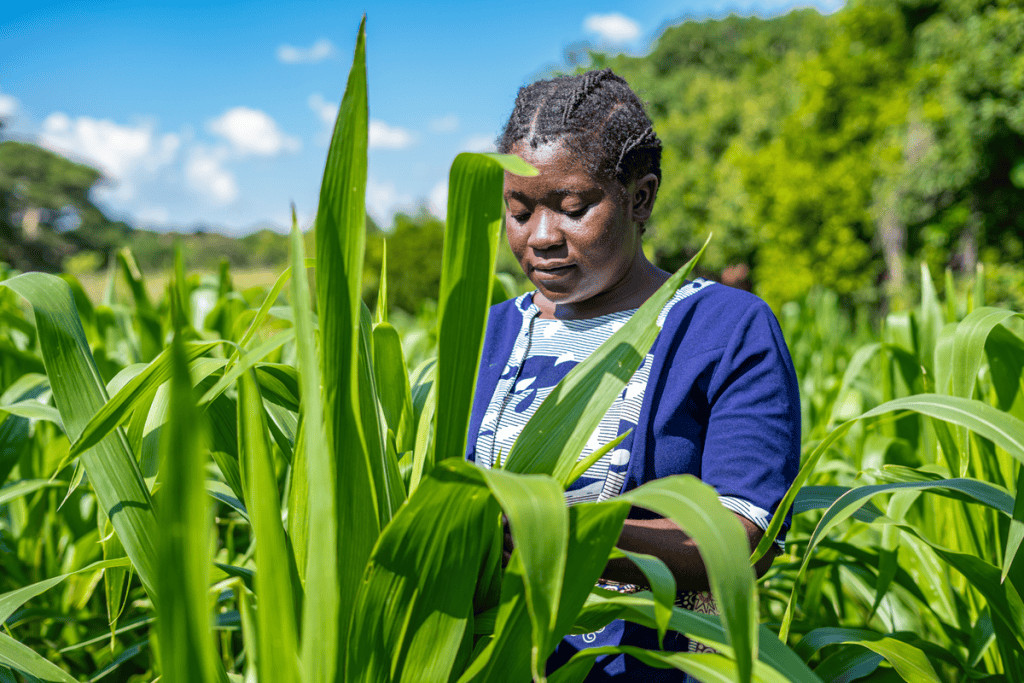
Farmer field schools, demonstration plots, extension programmes and peer-to-peer learning all play an important role in helping farmers understand how biocontrol products work and how they fit within existing production systems.
In many cases, seeing successful results under local conditions remains one of the most effective ways to encourage wider adoption. The Portal supports this approach by documenting case studies of successful biocontrol by farmers around the world on its website.
Small steps can lead to big changes
Another key takeaway summarised by Dr Dorothy Chandrabalan, from TFNET, was that biocontrol does not always require complex technology or major investment. Smallholder farmers can begin with accessible solutions such as microbial biopesticides or plant-based products and gradually expand their use of biocontrol over time.
Starting with simple interventions allows farmers to gain experience, build confidence and evaluate results before making larger changes to their crop protection programmes.
This gradual approach can make biocontrol more achievable for farmers operating in a wide range of production systems.
Market demand is driving change
Growing consumer interest in sustainably produced food, increasing export and retailer requirements around pesticide residues, regulatory changes and resistance issues are creating new opportunities for scaling biological control. Both Dr Malvika Choudhary and Dr Sivapragasam Annamalai highlighted how bioprotection can help farmers meet market expectations while supporting environmental and sustainability goals.
As market pressures continue to evolve, farmers who integrate biocontrol into their pest management programmes may be better positioned to access high-value markets and meet future compliance requirements.
Conclusion
Effective adoption depends on three key factors: access to reliable information, strong farmer support and proven results in the field.
Whether through better pest monitoring, conservation of beneficial insects, farmer training or the use of trusted resources such as the CABI BioProtection Portal, the path to greater adoption is becoming increasingly clear. As more farmers look for sustainable crop protection solutions, these practical steps provide a roadmap for scaling biological control across global farming systems and building a more resilient future for agricultural.
Watch now
To learn more, watch the webinar recording, Promoting the awareness and use of biological control in Asia, the Middle East and Africa.


