






Summary: The cucumber is an economically important crop in the United States and India. However, it is threatened by several insect pests and microbial diseases. Sustainable biological control methods, including beneficial microbes and natural enemies, can help combat these pests and improve cucumber quality and yield.
Overview:
What pests affect cucumber plants?
Squash vine border
Spotted cucumber beetle
Striped cucumber beetle
Squash bugs
Cucumber bacterial wilt
Cucumber mosaic virus
Melon aphids
How do I manage cucumber pests?
FAQ
Summary
Cucumber is an important crop to the economies of many countries, including the United States and India. The United States produced 595,630 tonnes of cucumbers in 2022, while India produced 183,223 tonnes. Cucumber production in both of these countries is vulnerable to attack by different pests. In India, pests cause an estimated 30-40% yield loss in cucurbit crops (the plant family that includes cucumbers), depending on the region. In the USA, the cucumber is susceptible to several pests that cause economic damage. This article focuses on how to identify cucumber plant pests and diseases and how to combat them using biological methods.
What pests affect cucumber plants?
Cucumbers are vulnerable to many insect pests, such as beetles and moths, and can also be affected by bacterial and viral infections. Many of these pests are especially harmful to young plants, and their severity and impact vary by region.
Squash vine borer (Melittia cucurbitae)
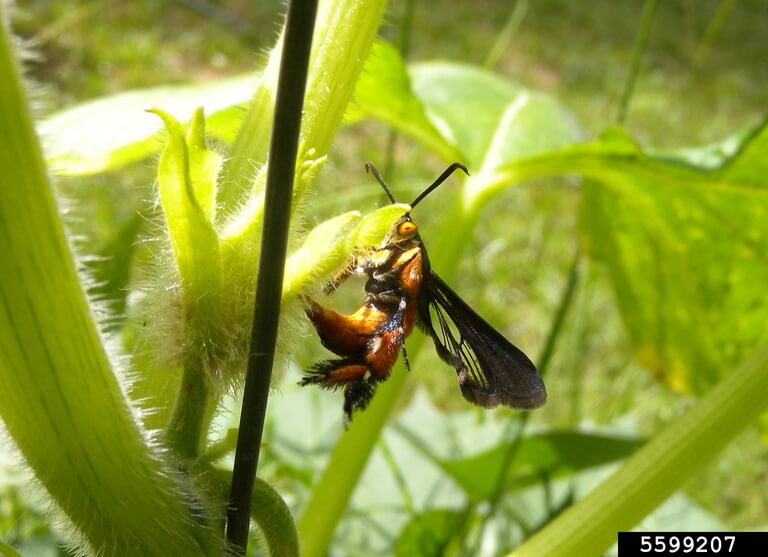
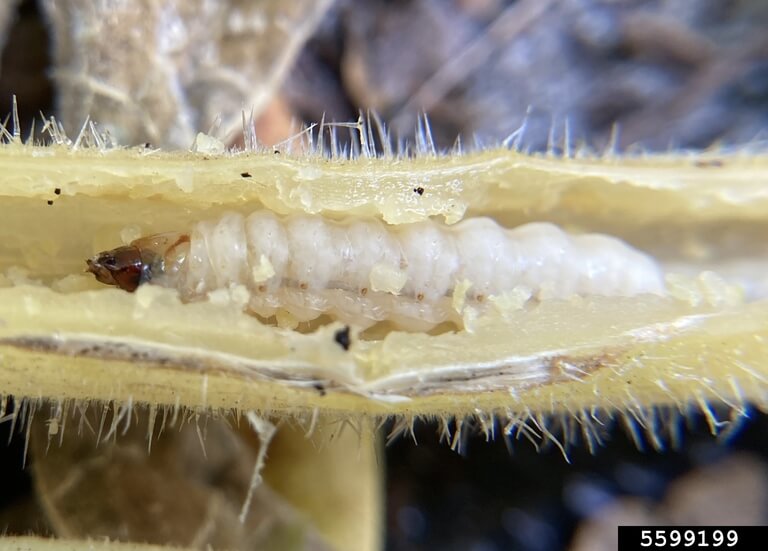
This pest is a species of moth that damages cucumber crops in its larval phase by feeding on the stems of developing plants. They grow to about 13 mm long, have an orange abdomen with distinctive black spots, and can easily be mistaken for wasps. They lay tiny, flat brown eggs at the base of host plants. Larvae hatch and bore inside the stem of the plant to feed. Larvae are typically white and can grow up to 25 mm long before forming a pupa (cocoon) in the soil. Feeding by squash vine borers blocks water flow within the plant, causing wilting that can progress to severe damage, plant collapse, and death.
Spotted cucumber beetle Diabrotica undecimpunctata
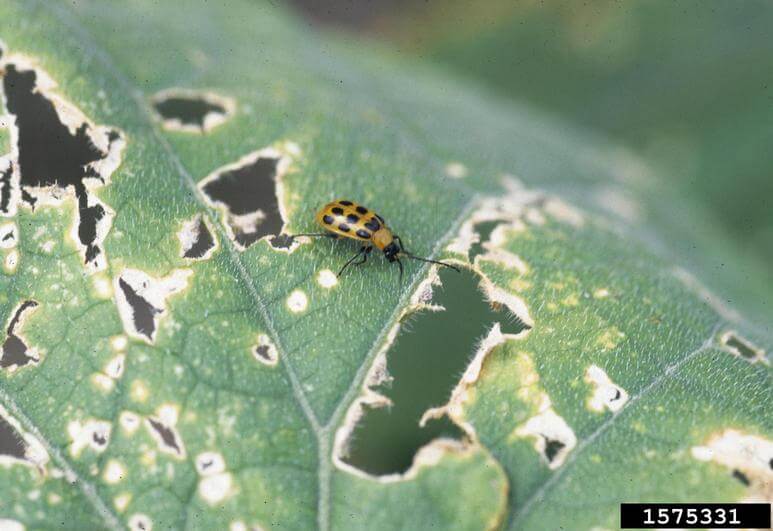
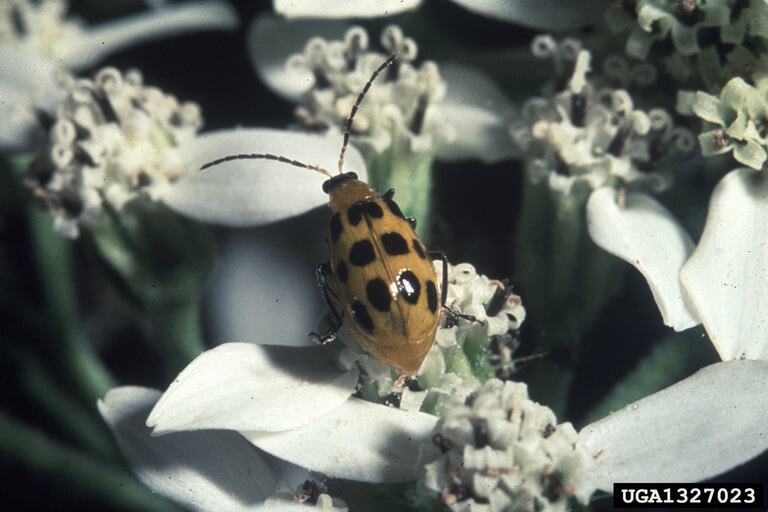
This pest is a species of beetle that damages cucumber plants by feeding on various parts of the plant, including leaves, blossoms, stems, and fruit. Adults reach approximately 5 mm in length and 2.5 mm in width. They are yellow with black heads and have 12 black spots on their wing covers. They lay small, orange-yellow eggs on plants, and the white larvae develop underground, growing to about 9.5 mm in length. Spotted cucumber beetles cause direct damage to plants by feeding, but can also infect plants with the bacterium that causes bacterial wilt disease. Symptoms of spotted cucumber beetle damage appear as holes in different areas of the plant. Younger plants are particularly susceptible to damage.
Striped cucumber beetle (Acalymma vittatum)
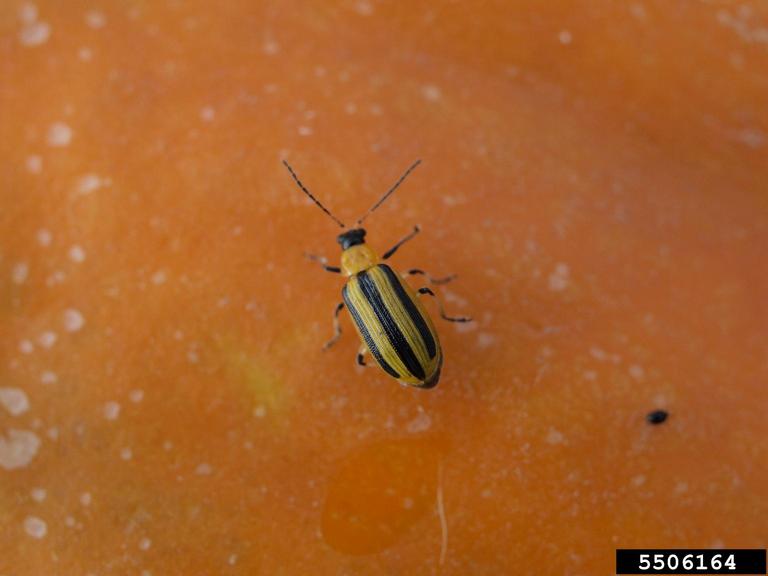
This species of beetle damages cucumber plants by feeding on flowers and leaves. Like the spotted cucumber beetle, they grow to about 5 mm long and 2.5 mm wide, but adults have black stripes instead of spots, making them easy to distinguish. They lay their eggs in the soil at the base of host plants, and larvae feed on roots after hatching. This species also transmits bacterial wilt disease. Damage appears as holes in the affected areas of the plant. Striped cucumber beetle infestations can cause complete leaf loss in immature plants.
Squash bug (Anasa tristis)
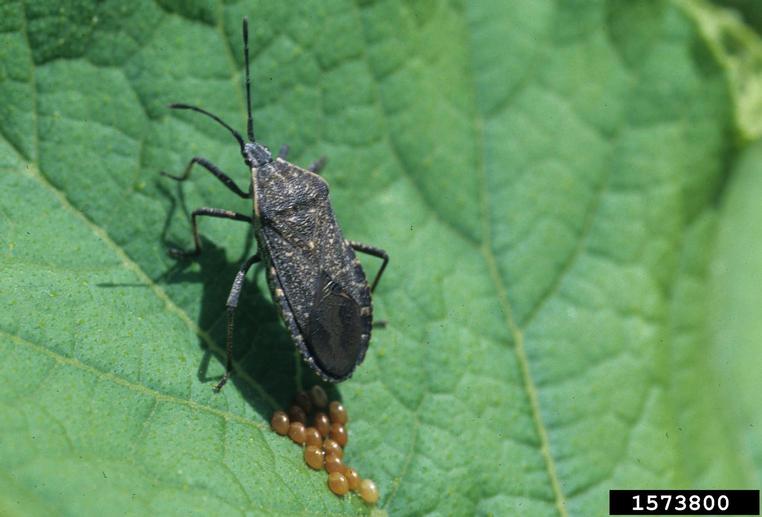
This pest is a relatively large species of flying insect that causes damage to cucumber plants by piercing the surface of leaves and feeding on plant fluids. Adult squash bugs are typically dark grey or brown and grow to about 16 mm. They lay oval-shaped eggs on the undersides of leaves, each measuring about 1.6 mm long. The immature stages of squash bugs, known as instars, grow to about 12.5 mm in length before reaching adulthood. Instars emerge from eggs bright green in colour but become darker as they grow. Damage from this pest appears as yellow and brown spots on cucumber leaves where it feeds. It can also spread yellow vine decline disease, which causes wilting.
Cucumber bacterial wilt (Erwinia tracheiphila)
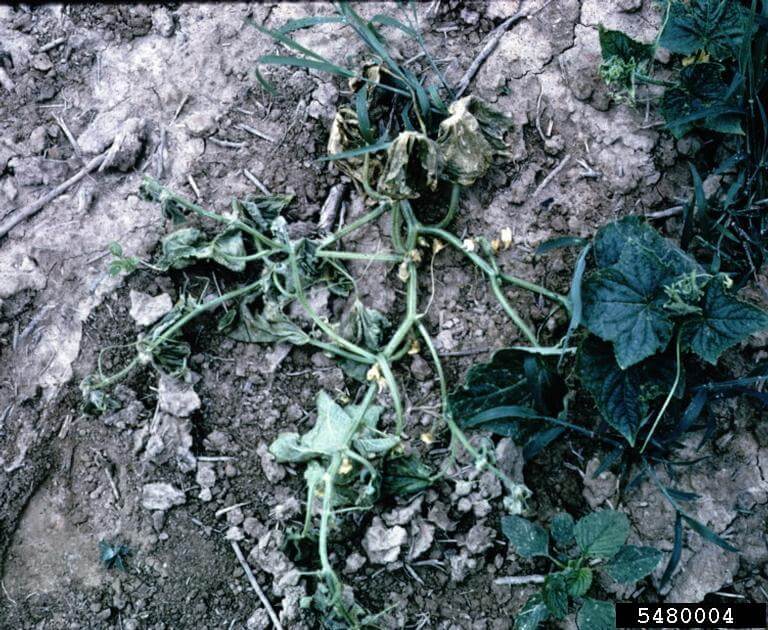
This bacterial disease can cause serious damage to cucumber plants and is especially harmful under dry or water-stressed conditions. It overwinters in its hosts, which include the striped and spotted cucumber beetles. These insects feed directly on plant tissue and transmit the bacteria into wounds through their excrement. Insects that feed on infected plants can become carriers of the bacteria and spread the disease further. Damage appears as leaf wilting and the drying out of stems. In severe cases, plants may die, while in milder cases, growth becomes stunted. When these symptoms occur alongside cucumber beetle damage, they strongly suggest bacterial wilt.
Cucumber mosaic virus (CMV)
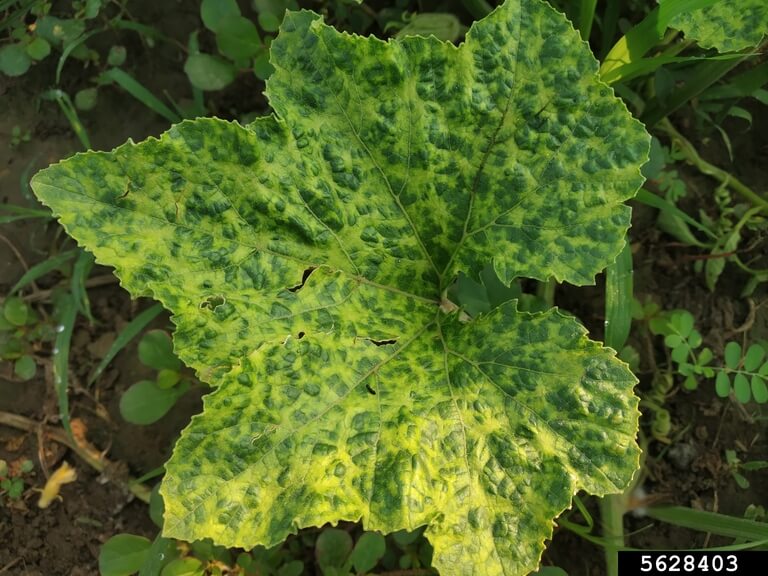
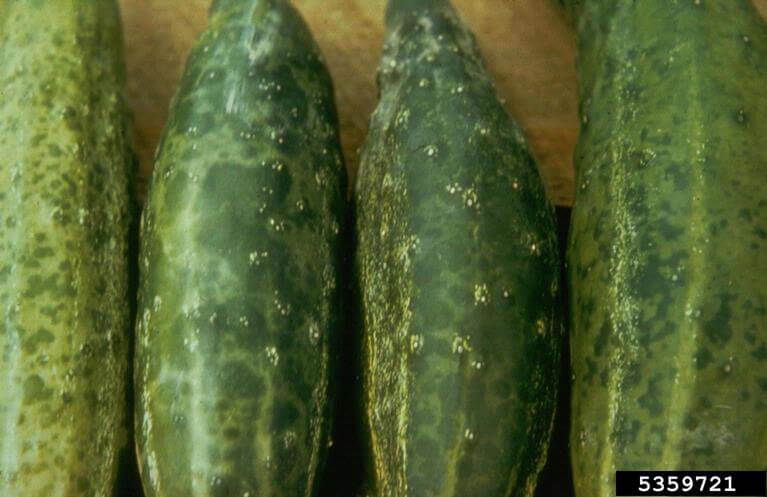
This virus infects more than a thousand plant species, including cucumbers. It has a global distribution and can cause serious plant damage and yield losses. Cucumber mosaic virus is primarily transmitted by aphids, which feed on cucumber plants. Aphids often acquire the disease from nearby perennial crops before transmitting it to cucumbers. Symptoms include a characteristic mosaic pattern and discoloured rings on the leaves of plants. Leaves can become misshapen, turn yellow and brown, and develop necrotic (dead) spots. The virus can also cause a blotchy appearance on cucumber fruit, which reduces its marketability.
Cotton aphid (Aphis gossypoii)
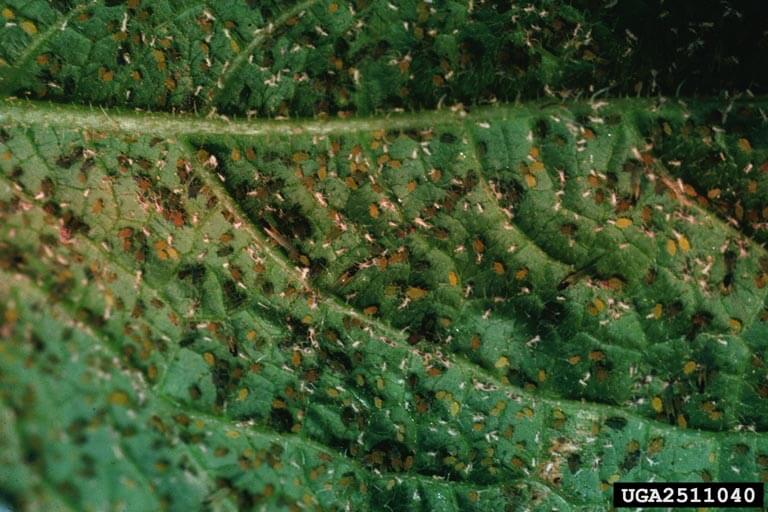
Aphids are a key carrier of CMV, so monitoring and controlling them can help prevent the disease from spreading. About 75 species of aphids are known to transmit CMV, including the cotton aphid. This species, also known as the melon aphid, feeds directly on sap from cucumber plants which can impact fruit growth in addition to its impact through transmitting CMV. Cotton aphids grow to about 1.5 mm long and can appear in shades of green, black, and yellow. They may have wings or be wingless and can typically be found on the underside of leaves. Symptoms of cotton aphid infestations include leaf curling and the appearance of sooty mold which grows in the honeydew that aphids secrete.
How do I manage cucumber pests?
Watch for the symptoms described above. Although these cucumber pests and diseases affect plants differently, changes in leaf colour or shape are common warning signs for all of them. The type of leaf damage can help identify the cause. For example, holes usually indicate insect feeding, while wilting or mosaic patterns often point to a microbial disease. The combination of holes and wilting in leaves may indicate infection by the cucumber wilt virus via cucumber beetle activity.
You may be able to spot adult beetles or squash bugs feeding directly on the plants. Squash bugs lay their eggs on the undersides of leaves, unlike cucumber beetles, which do not. In large infestations, adult squash vine borers may also be seen flying around, though they can easily be mistaken for wasps.
Cultural control
Cultural control involves using specific farming or garden practices to lower the risk of pest infestations. This method of crop management depends on correctly identifying the pest causing the issue. Using certified, virus-free seeds helps prevent cucumber mosaic virus from entering the growing area. Keeping the area free of weeds and fallen plant debris also reduces pest populations such as cucumber beetles and squash bugs. Removing plants that show signs of bacterial wilt can help prevent further spread of the infection. Planting trap crops like blue hubbard squash can help to keep cucumber beetles away from cucumbers.
Biological control
- Natural Substances: These are typically derived from plants and can be used to treat plants to repel or kill pests. Kaolin clay can be applied to plants to create a protective layer that prevents cucumber beetle feeding activity. Kaolin is a mineral.
- Semiochemicals: These are messaging compounds that can be used to disrupt pest behaviour. For example, pheromones can be used to trap and disrupt the mating of moth species like the squash vine borer.
- Microbials: These are microorganisms like bacteria, fungi, and viruses that kill and suppress pests and disease-causing microbes but do not damage the crop. For example, the bacterium Bacillus subtilis can help to combat Erwinia tracheiphila, which causes cucumber bacterial wilt.
- Macrobials: These are larger animals, like certain beneficial insects, that feed on or parasitise pests. For example, the minute pirate bug feeds directly on the larvae of many pests, including the squash vine borer. Similarly, apid midge larvae feed on many aphid species, including the cotton aphid.
Chemical Pesticides
As a world leader in nature-based pest management knowledge implementation, CABI encourages Integrated Pest Management (IPM) as the preferred, ecologically-based approach to producing healthy crops, which allows for chemical pesticide use only as needed, and when adhering to measures that limit the exposure of people and the environment to them (see FAO, International Code of Conduct on Pesticide Management).
Before considering the use of chemical pesticides farmers should explore all available non-chemical solutions to control pests and diseases of cucumber, including the ones listed above. For tailored pest management advice, visit the CABI BioProtection Portal, where you can enter your location and pest problem to explore customised solutions.
In case chemical pesticides are considered for use, farmers should look to select lower-risk chemical pesticides which, when used as part of an IPM strategy, help manage pest problems while minimising harmful effects on human health and the environment. Agricultural advisory service providers can provide information on lower-risk chemical pesticides that are locally available and are compatible within an IPM strategy. These experts can also advise on the required personal protective equipment.
FAQ
What is the main pest in cucumbers?
The types of pests that affect cucumbers vary by region. However, cucumbers are vulnerable to damage from many insects as well as bacterial and viral infections.
What is the best pest control for cucumber plants?
The first step in pest control is deciding whether action is necessary, as many insects do not harm cucumber quality or yield. Next, identify the specific pest or disease responsible for the problem. Once the pest is identified, there are often several biological control options available for resolving the issue.
What’s eating my entire cucumber plant?
If there is visible damage across multiple areas of the cucumber plant, then the spotted cucumber beetle may be the culprit, as it feeds on leaves, blossoms, stems, and fruit. These insects are yellow with black heads and have 12 characteristic black spots on their wing covers.
What is the major disease of cucumbers?
Cucumber mosaic virus is a major disease that affects cucumbers and more than a thousand other crops worldwide. It is spread by aphids and causes the characteristic mosaic patterning on leaves.
Summary
Cucumbers are economically important crops in both the United States and India, but yields are threatened by pests such as beetles, moths, and microbial diseases. These issues can cause serious damage to plants, reducing both yield and market value. IPM strategies, including biological methods, offer sustainable solutions for combating these issues. Natural enemies, beneficial microbes, and natural repellents can effectively reduce infestations while minimising chemical pesticide use where possible. By adopting eco-friendly control practices, cucumber growers can maintain healthy crops, improve fruit quality, and support long-term agricultural sustainability.
Explore various types of biological control agents, including options such as predatory mites, and discover detailed guides on managing pests.

