






Summary: Kale is an important crop in the United States and Australia, but pests like moths, butterflies, beetles, and harlequin bugs threaten yields. Biological control methods, such as neem oil and beneficial microbes, help protect kale from pests, improving crop quality and yield.
Overview:
What pests affect kale plants?
Imported cabbage worm
Cross-striped cabbageworm
Cabbage looper
Flea beetles
Harlequin bugs
Cabbage aphid
How do I manage kale pests?
FAQ
Summary
Kale is an important global crop and contributes significantly to the economies of the United States and Australia. California and Georgia are the main kale-producing states in the USA, where production increased by 145% between 2007 and 2017. In Australia, about 6,700 tonnes of English spinach, silverbeet, and kale are produced each year, valued at around A$23.5 million. Pests on kale plants can cause significant yield losses and reduce crop quality, lowering both market value and grower profitability. This article focuses on identifying kale plant pests and explores biological methods to control their numbers and protect crops.
What pests affect kale plants?
Kale crops are susceptible to a wide range of pests, including species of moths, butterflies, beetles, and stink bugs. The larvae of many moth and butterfly species feed directly on kale leaves, causing significant damage. The severity and type of pest problem varies by region.
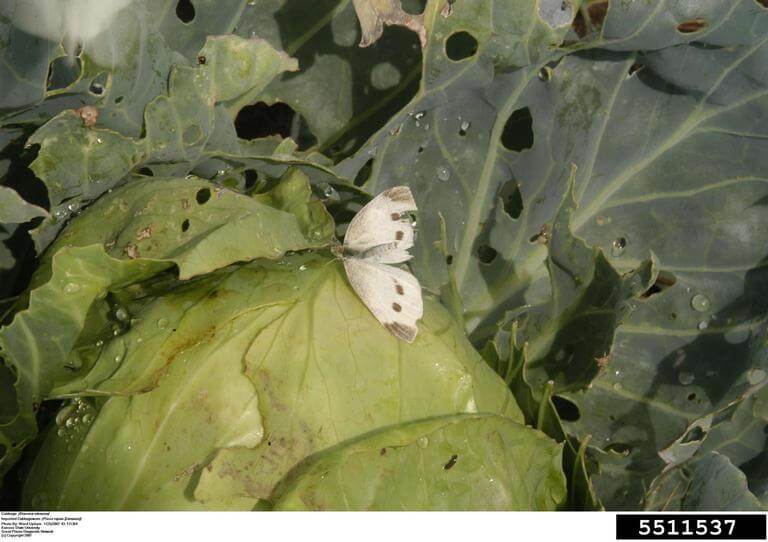
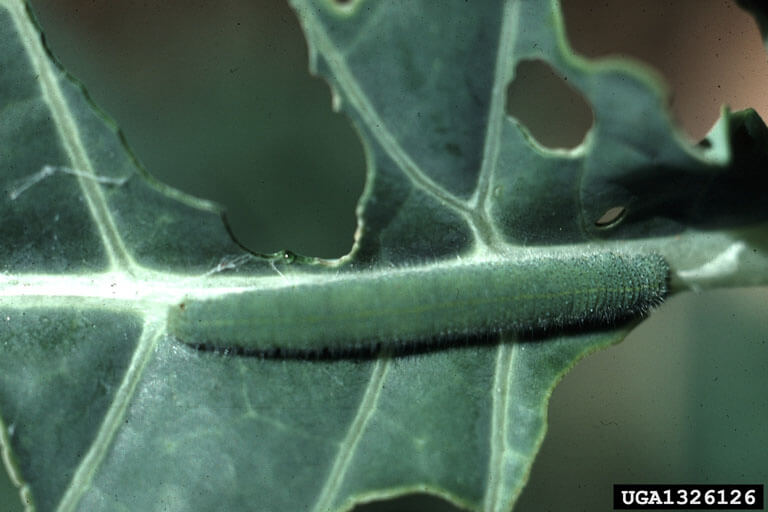
Imported cabbage worm (Pieris rapae)
This butterfly species damages kale plants during its larval stage by feeding directly on leaves. It is also known as the cabbage white or cabbage white butterfly. Adults have a wingspan of about 50 mm, with white upper wings marked by black tips and spots, and yellow colouring on the undersides. They lay tiny white-yellow eggs. Larvae (caterpillars) are green and grow up to 32 mm long. They form 25 mm cocoons in which they overwinter before emerging as butterflies in spring. Feeding by larvae causes small holes in kale leaves. Plants may lose all of their leaves during severe infestations, and small, dark green excrement pellets may be visible.
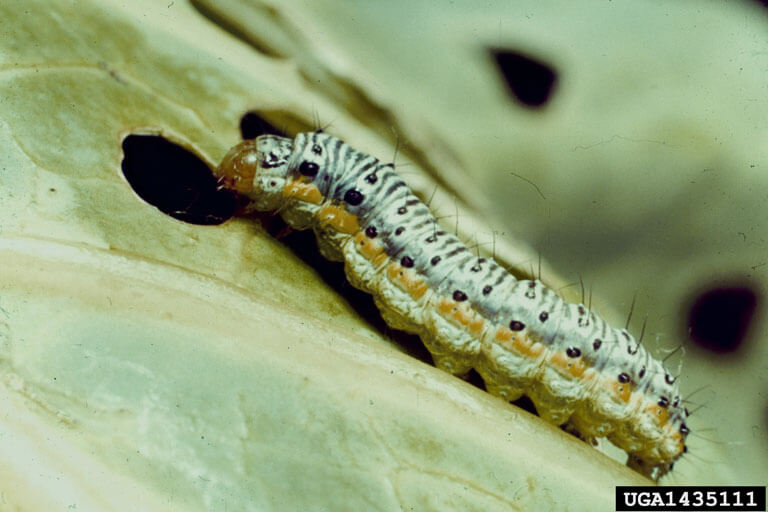
Cross-striped cabbageworm (Evergestis rimosalis)
This moth species damages kale plants in its larval stage by feeding directly on the leaves. Adult moths are straw-coloured with purplish wing bands and have a wingspan of about 25 mm. They lay flat yellow eggs. Larvae are grey but develop a more bluish colour as they grow, and typically have a yellow line running along each side. Symptoms of damage include the formation of small, irregularly shaped holes in leaves. Larvae are also known to burrow directly into the heads of developing plants.
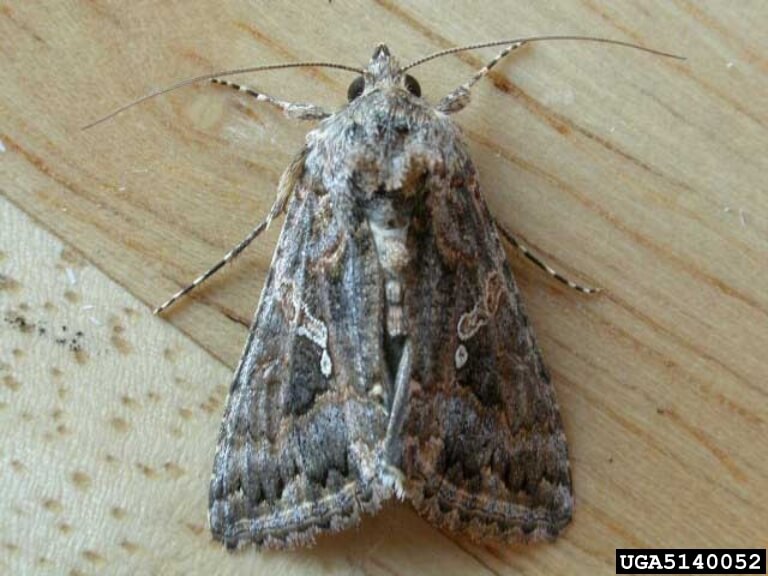
Cabbage looper (Trichoplusia ni)
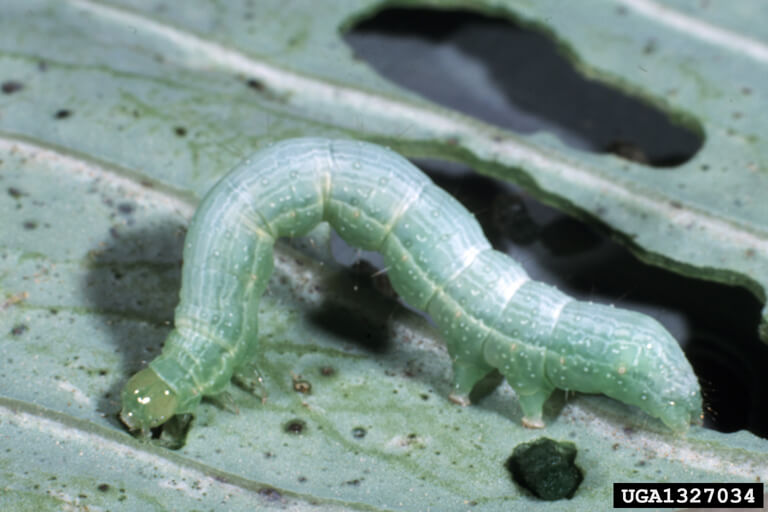
This pest is a species of moth that attacks kale plants in its larval phase by directly feeding on leaves. Adults are typically grey-brown with a wingspan of 38 mm. Eggs are yellow-white and oval-shaped and are usually laid on the underside of leaves. Larvae move in a distinctive looping motion, arching the middle of their bodies. They are typically green with a white stripe along each side and can grow up to 38 mm long. Damage appears as irregularly shaped holes in leaves, and excrement can usually be spotted on affected leaves.
Flea beetles (Phyllotreta spp)
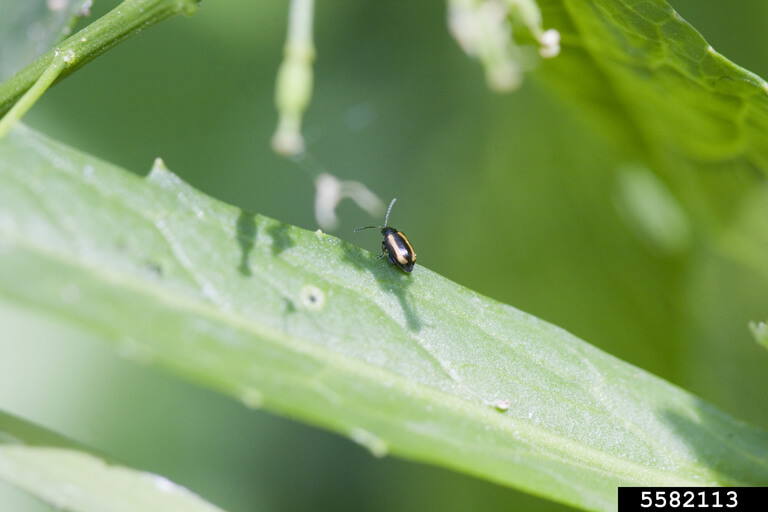
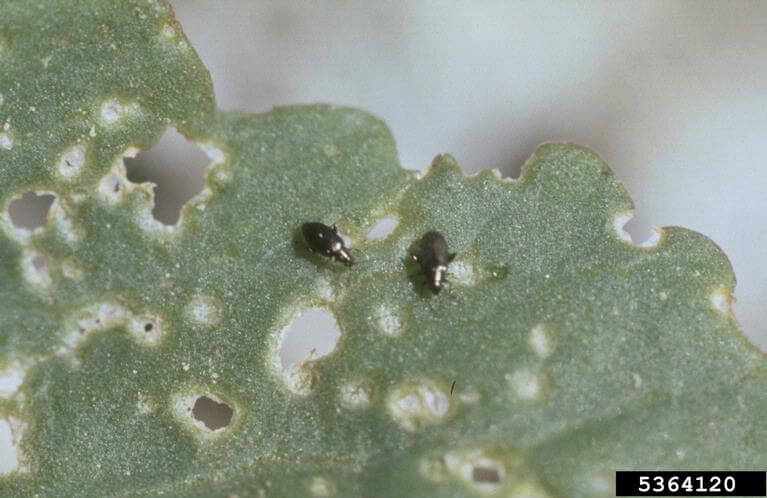
Many species of flea beetle share the same behaviour of damaging kale and other leafy greens by feeding on their leaves. Adults reach about 3 mm in length and jump like fleas when disturbed, giving them their name. They are usually brown but may also appear black, blue, bronze, or striped. This pest lays its eggs in the soil, and the small white larvae feed on host plant roots after hatching, though this rarely causes serious damage. Damage is mostly caused by adults and appears as characteristic “shot holes” in leaves, which are rounded and irregularly shaped. Large infestations can cause significant damage to kale plants.
Harlequin bugs (Murgantia histrionica)
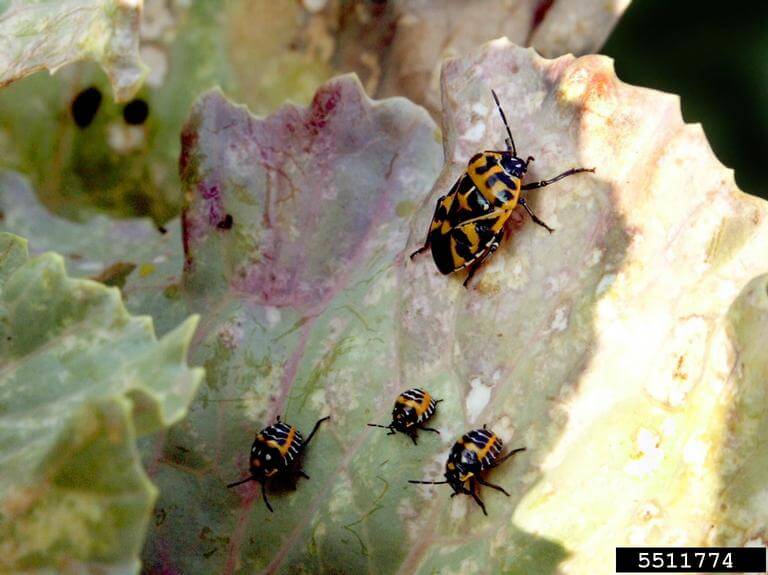
This insect pest damages kale plants by piercing the leaves and sucking plant fluids. Adults are brightly coloured, shield-shaped, and grow to about 9.5 mm long. They appear as black and yellow or black and red, depending on the season. They lay white, black-banded, barrel-shaped eggs. Nymphs progress through five instar (developmental) stages before reaching maturity. Harlequin bugs belong to the stink bug family and produce an odour if disturbed. Adults and nymphs feed on plant fluids, which leads to white spots and stippling. Leaves eventually turn yellow and brown and can wilt and die during severe infestations.
Cabbage aphid (Brevicoryne brassicae)
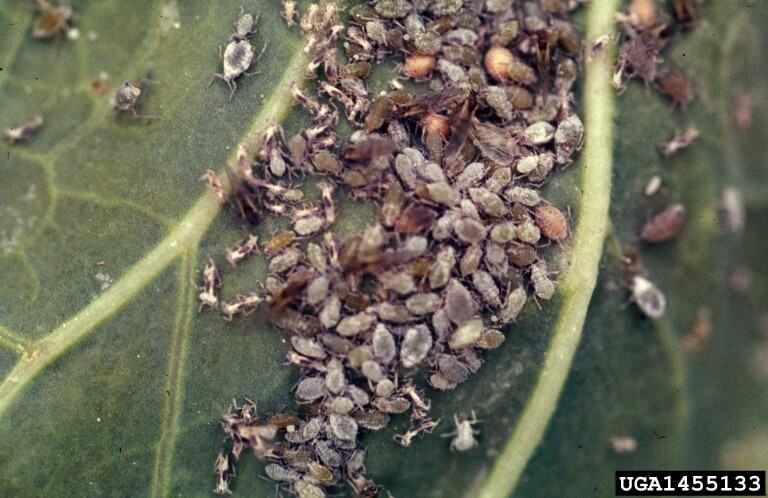
These pests are small insects that cause damage to kale plants by sucking plant fluids with a needle-like mouthpart. They typically have grey or green bodies, but can appear pale green-white due to a waxy substance which they secrete. Adults lay eggs on the undersides of leaves, which hatch in spring. Early developmental stages of the cabbage aphid can appear bright green. These aphids may be directly visible on the plants, especially in larger numbers. Damage can lead to stunted growth and plant death. Cabbage aphids are particularly damaging to young leaves.
How do I manage kale pests?
Fortunately, there are many methods available for protecting kale plants from the pests listed above. Effective strategies include a combination of Integrated Pest Management (IPM) practices and biological control methods.
Monitoring
Watch for the symptoms listed above. The most common sign of these pests is direct feeding damage, which appears as holes in the leaves. Different pests create distinct feeding patterns on leaves, which can help identify the specific species responsible. Larvae may be seen feeding directly on leaves, while a high abundance of adult moths and butterflies in the growing area or garden may indicate an infestation. Some of the pests mentioned above lay their eggs on the undersides of leaves, so inspecting these areas can aid identification. Small dark green excrement may also be visible and is often easier to spot than well-camouflaged green larvae.
Cultural control
Cultural control involves using specific farming or garden practices to lower the risk of pest infestations. This method of crop management depends on correctly identifying the pest causing the issue. Avoid using excessive nitrogen fertilisers in the soil, as this can lead to higher numbers of larvae in the growing area or garden. Many pests overwinter in fallen plant debris, so removing this material helps reduce their numbers. Using floating covers is a form of mechanical control that prevents pests from reaching plants. Hand-picking larvae can be effective in some cases, and growing faster-maturing kale varieties helps shorten the period when pests can cause serious damage.
Biological control
- Natural Substances: These are typically derived from plants and can be used to spray plants to repel or kill pests. For example, neem oil can combat harlequin bugs by interrupting their feeding and mating habits.
- Semiochemicals: These are messaging compounds that can be used to disrupt pest behaviour. For example, pheromones can be used to trap and disrupt the mating of moths and butterflies that attack kale.
- Microbials: These are microorganisms like bacteria, fungi, and viruses that harm pests and disease-causing microbes but do not harm crops. For example, the bacterium Bacillus thuringiensis causes a fatal infection in the larval stage of many pests, including the imported cabbage worm.
- Macrobials: These are larger animals, like certain beneficial insects, that feed on or parasitise pests. For example, the green lacewing feeds directly on the larvae of the cabbage looper and helps to control their numbers.
Chemical Pesticides
As a world leader in nature-based pest management knowledge implementation, CABI encourages IPM as the preferred, ecologically-based approach to producing healthy crops, which allows for chemical pesticide use only as needed, and when adhering to measures that limit the exposure of people and the environment to them (see FAO, International Code of Conduct on Pesticide Management).
Before considering the use of chemical pesticides farmers should explore all available non-chemical solutions to control bean bugs, including the ones listed above. For tailored pest management advice, visit the CABI BioProtection Portal, where you can enter your location and pest problem to explore customised solutions.
In case chemical pesticides are considered for use, farmers should look to select lower-risk chemical pesticides which, when used as part of an IPM strategy, help manage pest problems while minimising harmful effects on human health and the environment. Agricultural advisory service providers can provide information on lower-risk chemical pesticides that are locally available and are compatible within an IPM strategy. These experts can also advise on the required personal protective equipment.
FAQ
How do I stop bugs from eating my kale?
Several methods can help control pests that damage kale crops. For example, neem oil sprays protect plants from harlequin bugs and other insects, while beneficial bacteria that infect and kill the larvae of harmful moth and butterfly species are also highly effective.
What are the pests of kale?
Kale plants are vulnerable to many different pests, with moth and butterfly larvae being among the most common. The types of pests vary by region, so it’s important to identify the specific pest affecting your crop before taking action.
What is putting holes in my kale leaves?
Many insects can cause holes in kale leaves. Caterpillars from butterfly and moth species are common culprits, but pests like flea beetles and harlequin bugs also create holes when feeding. The shape and pattern of the holes can help identify the specific pest involved.
Is it safe to eat kale with bugs?
Kale that has been thoroughly washed to remove insects and their excrement is generally safe to eat. Pest damage can lead to stunted growth or holes in leaves, which may impact appearance and texture, but does not make the kale unsafe to eat once cleaned properly.
Summary
Kale is a valuable crop in both the United States and Australia, but pests such as caterpillars, beetles, and harlequin bugs threaten its yield and quality. Effective pest management combines monitoring, cultural control, and biological methods to reduce infestations. Techniques such as removing crop debris, using floating covers, and applying natural oils or beneficial microbes can help control pest populations. Adopting an IPM strategy supports sustainable kale farming that protects both growers and the environment.
Explore our in-depth pest management guides on controlling moth species such as the diamondback moth and on protecting other crops, such as cabbage.

