





At a recent webinar hosted by the CABI BioProtection Portal in partnership with the Natural Insect Control (NIC) and BASF, experts shared practical lessons on how beneficial nematodes, also called entomopathogenic nematodes (EPNs) can be used successfully in Integrated Pest Management (IPM) programmes.
From scientific research and field trials to commercial production and on-farm application, presenters explored what makes nematode-based biocontrol work in practice and how growers can overcome some of the common challenges associated with their use. The webinar featured presentations from Dr Stefan Toepfer (CABI), Dr David Shapiro-Ilan (USDA’s Agricultural Research Service), Stacey Hickman (Natural Insect Control) and Dr Diana Londoño (BASF).
The discussions revealed several practical lessons for farmers, advisers, researchers and IPM practitioners.
Beneficial nematodes are powerful allies in pest management
Opening the webinar, Dr Stefan Toepfer highlighted that despite their growing importance in biological control programmes worldwide, beneficial nematodes are still often misunderstood.
“They are the third most used group of biocontrol agents globally.”
He explained how these naturally occurring soil organisms actively seek out insect hosts, making them particularly effective against pests that are difficult to reach with conventional control methods.
“They can actively search for an insect.”
Unlike many crop protection products that rely on direct contact or ingestion, beneficial nematodes move through the soil or other substrates to find their target. Once inside an insect, they release bacteria that kill the pest, reproduce within it and then emerge in large numbers to seek out more insects. This ability to locate hidden pests is one of the reasons they have become such important biological control agents.
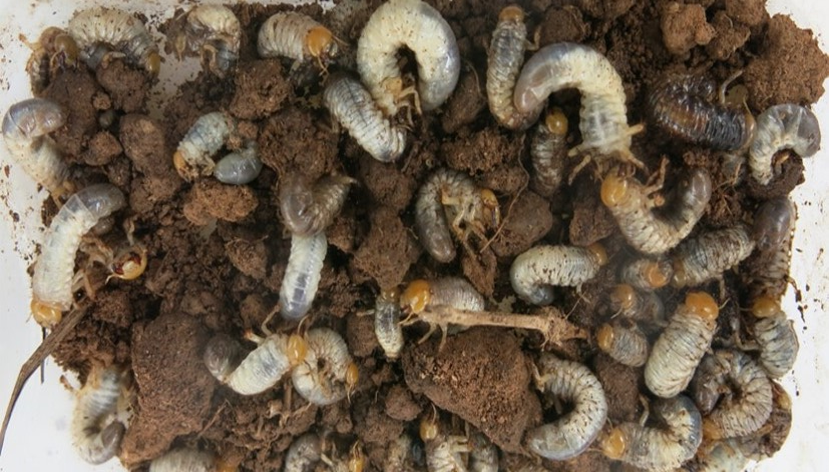
Dr Toepfer also emphasised the need to distinguish beneficial nematodes from plant-parasitic nematodes, which damage crops. He highlighted several misconceptions that continue to limit adoption, including the belief that nematodes are only suitable for organic farming or that they cannot be used alongside other crop protection tools. The webinar demonstrated that beneficial nematodes can play an important role in all three, conventional, integrated, and organic production systems.
Choosing the right beneficial nematode
A recurring theme throughout the webinar was that successful biological control starts with selecting the correct nematode species for the target pest and environment. For example, there are some nematode species that are highly effective against beetle or weevil pests, others against lepidopteran caterpillars, others against dipteran maggots such as fungus gnats, and others against different thrips.
Drawing on years of public-sector research, Dr David Shapiro-Ilan shared examples showing how different nematode species can perform very differently under field conditions, even when laboratory results appear promising.
“The first step… is identifying the candidate organism. What’s the best nematode to use? The best species? The best strain?”
Through examples including plum curculio weevils and peach tree borers, he demonstrated that understanding the biology of both the pest and the nematode is essential for delivering reliable results. Research and field testing remain critical for identifying the most effective solutions for specific cropping systems.
Handling and application can determine success or failure
One of the strongest practical messages came from Stacey Hickman of Natural Insect Control, who focused on the day-to-day realities of working with nematodes.
“Beneficial nematodes are a living organism. They are not a spray-and-forget kind of product.”
Because nematodes are living organisms, factors such as storage temperatures, moisture levels, sunlight exposure and application methods all influence performance. Hickman stressed that many product failures are not due to the nematodes themselves but to how they are stored and applied.
“The most disappointing things that growers see is that the nematode doesn’t work, and they just think it’s the nematode itself that’s not working, and in most cases, it’s actually the handling, storage and application of it.”
Among her recommendations for successful application were:
- Store nematodes under cool conditions and avoid temperature fluctuations.
- Apply them soon after mixing with water.
- Ensure adequate soil moisture before and after application.
- Avoid direct sunlight and high temperatures during application.
Nematodes deliver the greatest value within IPM programmes
Dr Diana Londoño, Global Technical Lead for Bioinsecticides at BASF, focused on how beneficial nematodes fit within broader IPM strategies.
“When you talk about integrated pest management, that includes different combinations that can be cultural, mechanical, behavioural, chemical and also biological…”
Using examples including codling moth, slugs and western flower thrips, she demonstrated how beneficial nematodes can complement other control measures when applications are timed correctly and targeted at vulnerable pest life stages.
Dr Londoño also highlighted the importance of understanding environmental conditions such as temperature and moisture when selecting nematode species and designing control programmes. Different species perform best under different conditions, making product selection an important part of successful implementation.
She also stressed the importance of checking compatibility with other crop protection products.
Innovation is improving nematode performance
The webinar also highlighted ongoing research aimed at overcoming barriers to wider nematode adoption.
Dr Shapiro-Ilan discussed advances including protective gel formulations, improved application methods and pheromone-based technologies designed to help nematodes locate hosts more effectively and survive challenging environmental conditions.
One particularly promising area of research involves using naturally occurring nematode pheromones to improve pest control performance.
“We can use their pheromones that direct their behaviour to our advantage.” Dr David Shapiro-Ilan, USDA’s Agricultural Research Service.
These innovations could help improve field consistency while making nematode-based products more practical and cost-effective for growers.
Access to reliable information supports adoption
The speakers also highlighted the importance of providing farmers and advisers with trustworthy information about available biological control options.
Dr Toepfer demonstrated how the CABI BioProtection Portal helps users identify registered bioprotection products, including beneficial nematodes, and access guidance on their use. The Portal provides practical information to support informed decision-making and help users integrate biological control products into their pest management programmes.
Conclusion
The webinar demonstrated that beneficial nematodes are already delivering effective biological control in agricultural systems around the world. However, successful adoption depends on choosing the right species, understanding the target pest, applying products correctly and integrating them into a broader IPM strategy.
As Stacey Hickman summarised:
“Successful nematode programmes are built on scouting, timing, compatibility and follow-up. It’s not just luck.”
Together, the insights shared by Dr Stefan Toepfer, Dr David Shapiro-Ilan, Stacey Hickman and Dr Diana Londoño showed how scientific research, practical experience and continued innovation are helping beneficial nematodes become an increasingly valuable tool for sustainable crop protection.
Watch now
Watch the full webinar to explore how entomopathogenic nematodes are being applied in sustainable pest management programmes.


