Vale Direto Forum highlights digital tools for sustainable agriculture
The CABI BioProtection Portal and PlantwisePlus digital tools were among the highlights at the Vale Direto Forum 2026. The event brought together about 240 farmers, along with researchers, consultants, and industry leaders from across Brazil. It was organised by the Association of No-Till Farming of the Paranapanema Valley (APDVP) in partnership with the Municipality of Pedrinhas Paulista and supported by the Agricultural Cooperative of Pedrinhas Paulista (CAP).
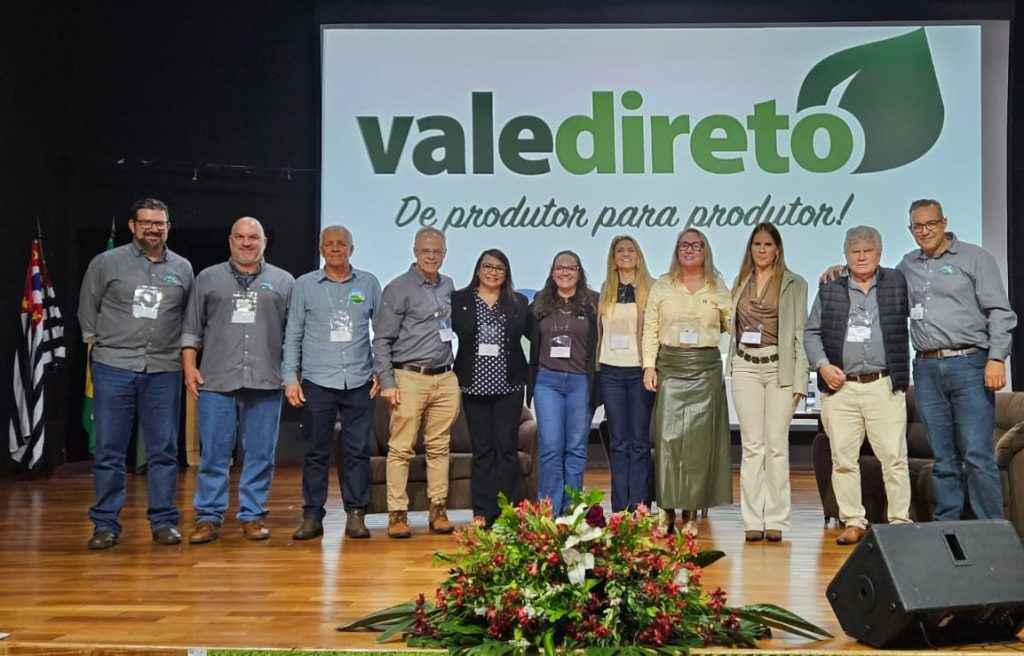
The forum served as an important platform to discuss innovation, sustainability, regenerative agriculture, biological solutions, digital tools in agriculture, and climate resilience. It also reinforced the role of collaboration in advancing the agricultural transition towards more productive and sustainable farming systems.
On 10 September 2026, the city of Pedrinhas Paulista, in the state of São Paulo, hosted another edition of the Vale Direto Forum. The gathering brought together participants from the public and private sectors to discuss new technologies, sustainability, digital tools in agriculture, and strategies to enhance the competitiveness of Brazilian agribusiness. At a time when agriculture faces increasingly complex challenges, such as climate change, the emergence of new pests, growing market demands, and the need to produce more while reducing environmental impact, the forum reinforced the importance of innovation and collaboration among different stakeholders to accelerate the transformation of the agricultural sector.
Throughout the event, participants had the opportunity to learn about initiatives that are helping make agricultural production more efficient, resilient, and sustainable. There was particular emphasis on the use of bioinputs and digital solutions designed to support farmers’ decision-making processes.
How digital tools are transforming modern agriculture
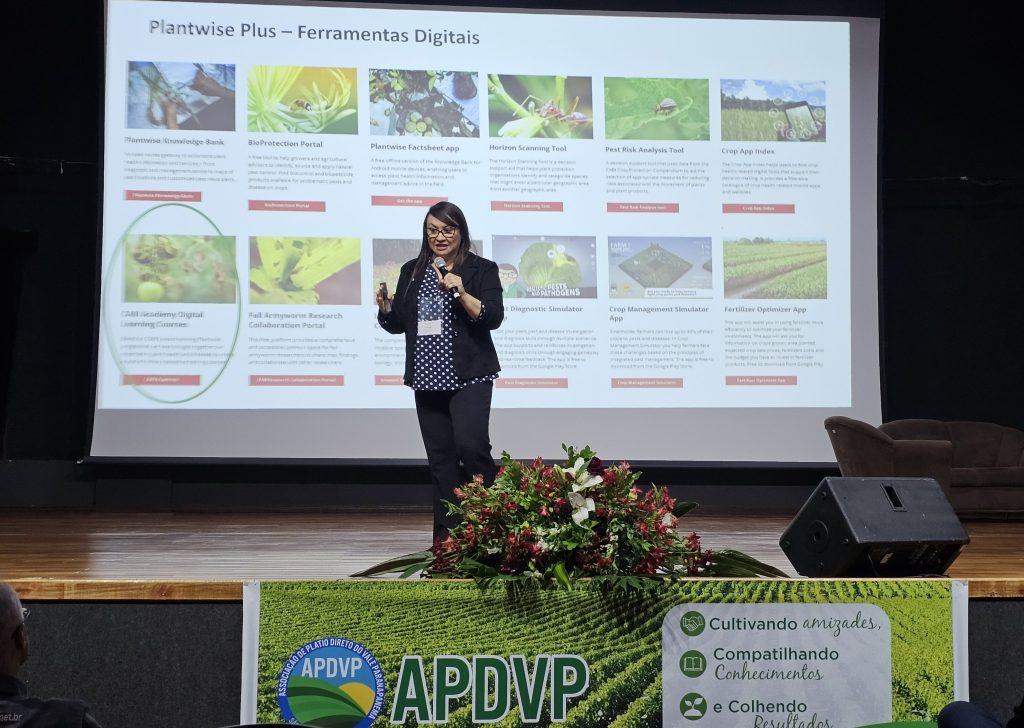
One of the highlights of the programme was the presentation delivered by Dr. Yelitza Colmenarez, CABI Latin America Regional Director. She shared key initiatives from PlantwisePlus, a global programme focused on strengthening agricultural extension systems, improving pest management, and disseminating technical knowledge to farmers and agricultural professionals.
During her presentation, Dr. Colmenarez emphasised how digital tools in agriculture are transforming the way farmers access technical information, identify plant health challenges, and adopt more sustainable agricultural practices.
“Facilitating access to knowledge for farmers and field technicians is one of the cornerstones of more efficient and resilient agriculture. Digital platforms enable high-quality technical information to reach users quickly and accessibly, supporting more informed decision-making in the field,” she noted.
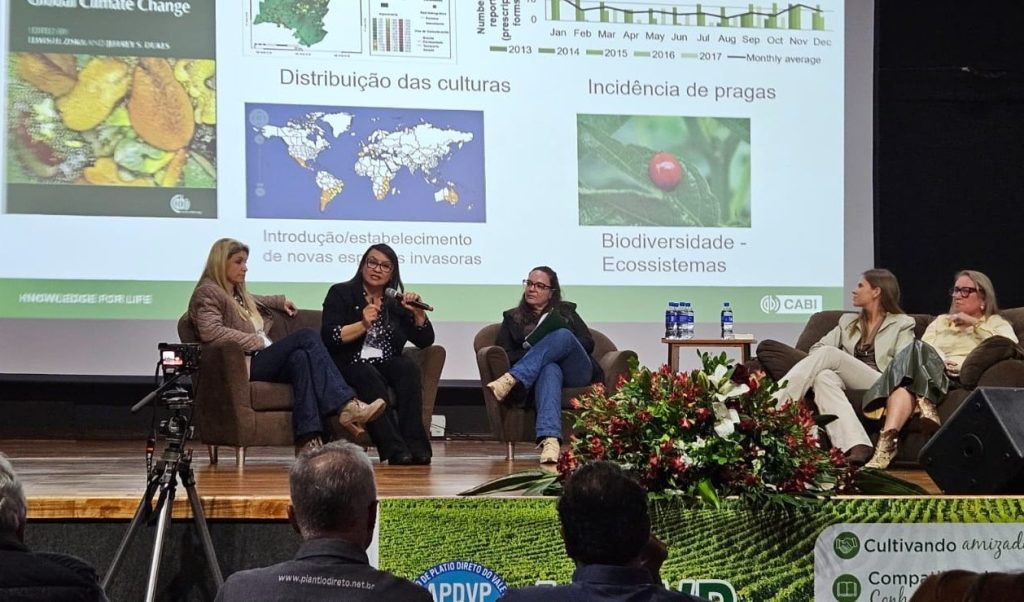
Dr. Colmenarez also participated in the Climate Change panel, discussing the impact of climatic factors and invasive species in agricultural production. She highlighted CABI information platforms and tools such as the Invasive Species Compendium, Horizon Scanning Tool, and the Plant Health Cases.
CABI BioProtection Portal takes centre stage
One of the most significant moments of the presentation was the demonstration of the CABI BioProtection Portal, an international platform that provides information on registered biological control products and solutions for different crops and countries.
The platform has become an important resource for agronomists, consultants, and farmers seeking sustainable alternatives for pest and disease management, contributing to the expansion of biological control adoption and supporting the implementation of Integrated Pest Management (IPM) principles.
Participants were also introduced to a video highlighting Brazil’s successful experience in advancing the use of biological control products through the CABI BioProtection Portal, demonstrating how digital tools in agriculture can support the adoption of sustainable crop protection practices. This initiative is the result of an important partnership involving the Ministry of Agriculture and Livestock (MAPA), ESALQ-SPARCBio, Embrapa, CropLife Brazil, and Koppert Brazil. These organisations have been working together to expand farmers’ access to reliable information on biological solutions for agriculture.
The Brazilian case was presented as a successful example of collaboration among government, academia, the private sector, and international organisations, demonstrating how joint efforts can accelerate innovation and promote more sustainable agricultural practices.
Digital transformation and sustainability go hand in hand
One of the key themes discussed during the Vale Direto Forum was the growing importance of digital transformation for the future of agriculture.
Advances in digital technologies are enabling farmers to access more accurate and real-time information on pest monitoring, weather conditions, good agricultural practices, and sustainable management alternatives. These tools not only enhance farm operational efficiency but also help reduce risks, optimise input use, and minimize environmental impacts.
In this context, initiatives such as PlantwisePlus and the CABI BioProtection Portal demonstrate how technology can serve as a bridge between scientific research and practical field application, making knowledge more accessible and strengthening farmers’ ability to respond to current and future challenges.
Building the future of agriculture
The Vale Direto Forum reinforced the importance of creating spaces for dialogue and knowledge exchange among stakeholders across the agricultural ecosystem. As sustainability, innovation, and food security occupy a central place on global agendas, knowledge sharing has become a strategic element in the sector’s development.
By bringing together experts, producers, and organisations committed to innovation, the event highlighted that the future of agriculture will increasingly depend on the integration of science, technology, and institutional cooperation.
The presentation of PlantwisePlus digital tools and the Brazilian experience with the CABI BioProtection Portal demonstrated that digital transformation is already a reality in agriculture and that access to reliable information will be one of the key drivers in building more productive, sustainable, and resilient agricultural systems capable of meeting the challenges of the coming decades.
The CABI BioProtection Portal is pleased to welcome the South African Bioproducts Organisation (SABO) as its newest associate member, strengthening efforts to bring safe, registered biocontrol products to more South African farmers.
Established in 2013 through a collaboration between government, universities and the bioproduct industry, SABO exists to grow South Africa’s bioproduct sector while protecting both the market and end users. A central focus for SABO is working with regulators to shorten the time it takes for biologicals to reach registration which will help new, science-based solutions get into farmers’ hands faster.
A shared focus on registration and trust
South Africa distinguishes between biofertilisers (M-registered products) and biopesticides such as bioinsecticides and biofungicides (L-registered products). SABO works to raise awareness of this distinction, as some products are marketed in ways that blur the line between the two. This has led to some farmers using unregistered products with poor results and losing faith in the efficacy of biocontrols.
SABO’s focus on clarity and trust mirrors the CABI BioProtection Portal’s own mission: helping growers and advisors worldwide find and use registered, reliable biocontrol products with confidence.
“This partnership with the CABI BioProtection Portal is a significant step towards SABO’s vision of empowering growers through trusted information, practical training, and greater confidence in the safety, quality, and effectiveness of the biological products they use.” Deidre Odendaal, SABO
Growing knowledge among South African farmers
Education is central to SABO’s approach. The organisation trains farmers and advisors on where biologicals fit within Integrated Pest Management (IPM) programmes, and collaborates with CropLife South Africa on crop protection training, including a biological control course developed with Stellenbosch University.
SABO also produces compliance flyers and cheat sheets to help growers identify registered products, and is working with CropLife to build a shared list of registered bioproducts for the industry.
Looking ahead
Together, we aim to help more South African growers make informed choices about biological crop protection, reducing use of unregistered or unsuitable products and supporting a more sustainable future for agriculture.
The CABI BioProtection Portal is delighted to welcome Ispahani Agro Limited as its first partner from Bangladesh, marking an important step in expanding access to sustainable crop protection solutions across South Asia.
With a history of doing business in the Indian subcontinent dating back to 1820, Ispahani has built a strong reputation for supporting agriculture in Bangladesh through innovation, research and farmer-focused solutions. Guided by its vision of “safe food for a better life,” the company works across four key business areas: seeds, biotechnology, agro-processing and crop health. Through these activities, Ispahani contributes to improving agricultural productivity while promoting environmentally responsible farming practices.
A shared commitment to sustainable agriculture
The partnership brings together two organizations with a common goal: helping farmers adopt sustainable pest management approaches and reduce reliance on conventional pesticides.
Ispahani and CABI have collaborated for many years and, alongside universities, non-governmental organisations and other partners, have played an active role in advancing sustainable agricultural technologies in Bangladesh.
“Through its partnership with the CABI BioProtection Portal, Ispahani reinforces its commitment to accelerating the adoption of Integrated Biorational Pest Management to advance safe food production and improve farmers’ livelihoods and builds a sustainable future for generations to come.” Fawzia Yasmeen, Director, Ispahani Agro Limited
As awareness of biopesticides continues to grow in Bangladesh, Ispahani is helping make these technologies more accessible through its extensive distribution network of more than 1,300 dealers and retailers. Today, the company offers 45 different biopesticide products, alongside a range of seeds and other agricultural inputs.
Bringing practical bioprotection solutions to farmers
Fifteen of Ispahani’s biological crop protection products are already featured on the CABI BioProtection Portal, helping farmers and advisors in Bangladesh identify and access registered bioprotection solutions. As part of the partnership, additional products will be added to the Portal, with each listing providing product use information and application requirements.
The partnership supports Ispahani’s ambition to broaden access to sustainable agricultural technologies, increase international visibility for its bioprotection portfolio and strengthen connections with growers and stakeholders in other markets.
Supporting farmers locally and globally
Ispahani is actively involved in research, production, processing and value-chain development, including significant work within the rice sector. The company also exports products internationally and is targeting further growth in markets including the Philippines and Rwanda.
Together, CABI and Ispahani are supporting the transition towards more sustainable pest management practices, empowering farmers with the knowledge and tools needed to produce healthy crops, protect biodiversity and contribute to resilient food systems for the future.
The CABI BioProtection Portal 14th Development Consortium Meeting was held on May 21st, 2026, bringing together 21 Members to review progress and share updates on the Portal’s expansion, impact and future direction, including its role in supporting bioprotection expansion globally. Discussions focused on Portal developments, commercial objectives for 2026, and the launch of CABI’s Global Partnership for Pesticide Risk Reduction.

Expanding global reach of the BioProtection Portal
The Portal continues to establish its position as a trusted, science-based resource for biological control and biopesticide advice, contributing to bioprotection expansion through improved access to reliable information. During the meeting, Members heard that the Portal is now available in 54 countries, following the addition of Switzerland, Lebanon, the Netherlands and Austria. According to one of the Portal’s Sponsors DunhamTrimmer, this expanded reach means that the Portal now covers 77.4% of the global biologicals market across major and secondary markets. Traffic to the site also continues to grow thanks to ongoing promotional activities.
New evidence highlights impact on biopesticide adoption
Evidence of the Portal’s real-world impact was highlighted through a published study from India. The study found that farmers using the Portal were 94% more likely to adopt biopesticides than those who did not, demonstrating its effectiveness in influencing farmer decision-making and encouraging the uptake of sustainable crop protection solutions. These findings reflect the Portal’s growing bioprotection impact in supporting informed choices among farmers.
Strategic priorities for 2026
Looking ahead, Members heard and discussed the Portal’s objectives for 2026, which focus on building its commercial viability and further expanding its global influence. Planned activities include diversifying income streams, further increasing country coverage, and investigating the addition of biostimulants to the platform to broaden its value for users and support continued bioprotection expansion.
Supporting informed decision making in practice
Stacey Hickman from Natural Insect Control illustrated the practical benefits of the Portal by sharing her experience using the tool to support biocontrol decisions in Canada. She emphasized its value as a trusted, science-based resource that enables them to verify which options are available for specific pests, cross-check modes of action and compatibility with integrated pest management programmes, and support grower conversations with credible data, further demonstrating its real world bioprotection impact.
Introducing the Global Partnership for Pesticide Risk Reduction
CABI Chief Scientist Ulli Kuhlmann introduced CABI’s new Global Partnership for Pesticide Risk Reduction. He outlined its focus on supporting lower-risk pest management in lower-middle-income countries through coordinated efforts in policy, research, and production initiatives, as well as the CABI BioProtection Portal’s key role in delivery.
Looking ahead
The meeting highlighted continued collaboration among Members and a shared commitment to expanding awareness and access to sustainable pest management solutions. As the CABI BioProtection Portal continues to grow in both its reach and impact, it remains an important resource in supporting the adoption of bioprotection among farmers and advisors globally.
Across Latin America and the Caribbean (LAC), demand for safer crop protection is growing. The CABI BioProtection Portal (BPP), the world’s largest free resource for biological plant protection, and Guarany are responding together. Through joint farmer training, shared knowledge resources, and strategic engagement with governments, they are increasing awareness and adoption of bioprotection across the region.

Why bioprotection in Latin America matters
The over-reliance on chemical pesticides poses risks to human health, biodiversity, and the environment. As a result, farmers, advisors, and policymakers are actively seeking less harmful alternatives.
The CABI BioProtection Portal addresses this need by providing validated, country-specific information on registered bioprotection products across more than 50 countries. Guarany, a Brazilian company specialising in sustainable application technology, shares this commitment to safer pest management. Together, their complementary strengths create a foundation for expanding bioprotection use in LAC.
A partnership built on shared values
Guarany is a sponsor of the CABI BioProtection Portal and a longstanding collaborator in CABI’s work across the region. This reflects their alignment around Integrated Pest Management (IPM), responsible pesticide use, and the promotion of biological control as a first-line solution for farmers.
As Alida Bellandi of Guarany explains: “Collaborating with CABI in various Latin American countries over the years has been a valuable experience. By sharing common ideals and principles, we came to understand the importance of joining efforts to multiply the knowledge acquired over the years.”
How CABI and Guarany are working together
CABI and Guarany collaborate through two main activity streams.
Firstly, by engaging farmers and advisors on sustainable crop protection approaches. Joint training events, including regional Training of Trainers sessions, have brought together participants from across LAC. Farmers, plant doctors, agro-input dealers, and national technicians have gained practical skills in bioprotection and sustainable application techniques.
Secondly, through government engagement. Alongside farmer-level activities, CABI and Guarany have taken part in strategic meetings with agricultural ministries and government bodies across LAC. These engagements support the development of the bioprotection sector, including clearer registration pathways for biological products and national IPM strategies that reduce reliance on chemical inputs.

The role of the CABI BioProtection Portal
The Portal ensures that reliable, actionable information on bioprotection products is accessible to everyone. Farmers and advisors participating in the joint training event or other collaborative activities are introduced to the Portal as a trusted source of information on what registered biopesticide products exist for their crop or pest. The Portal also supports the work CABI and Guarany do on improving regulation in the bioprotection sector, by providing a platform for government officials to map and better understand the biopesticide landscape in their country.
“This collaboration shows how public–private partnerships can speed up the adoption of safer, more effective, and environmentally responsible farming practices,” said Dr. Yelitza Colmenarez, CABI’s Regional Coordinator for Latin America and the Caribbean.
Supporting bioprotection in Latin America and beyond
The CABI BioProtection Portal and Guarany share a commitment to making sustainable agriculture more accessible across the region. By combining the Portal’s data and educational resources with Guarany’s technical expertise and by working at both farmer and policy levels, this partnership is actively helping bioprotection in Latin America become the default approach rather than the exception.
EU policy momentum around biocontrol is accelerating. In November 2025, the European Parliament adopted its own-initiative report calling for faster approval and uptake of biocontrol solutions.

The report outlined potential measures including clearer definitions of biocontrol, streamlined approval procedures, improved mutual recognition between Member States and provisional authorisation pathways.
Policy reforms aim to speed up access to biocontrol solutions
The European Commission’s Food and Feed Safety Simplification Package, published in December 2025, built on this momentum by proposing targeted amendments to EU Regulation 1107/2009 (EU regulation concerning the placing of plant protection products on the market). The package aims to accelerate market access for biocontrol substances and products to support innovation and ensure farmers have timely access to sustainable crop protection tools.
Key proposed amendments include establishing an EU-level definition for biocontrol active substances and their products, prioritising approval and authorisation procedures for biocontrol, enabling provisional authorisation options, creating a single EU zone for biocontrol and low‑risk products to improve equitable access, and more.
Supporting biocontrol visibility across the EU
As EU policy reforms progress, access to reliable, independent information on biocontrol products and registrations is becoming increasingly important for agricultural stakeholders across the EU – from growers and advisors to regulators, distributors, and policymakers.
The CABI BioProtection Portal is uniquely positioned to support this need. As a free searchable directory of nationally registered biocontrol and biopesticide products across several EU member states, it addresses diverse needs:
- Makes biocontrol products more visible and discoverable across countries
- Supports evidence-based decisions for sustainable crop protection
- Helps stakeholders stay informed as registrations evolve
- Offers a clear, independent view of biocontrol availability in real time
Together, this helps farmers, advisors, manufacturers and regulators to keep abreast of what products are available in different countries and identify possible market gaps or opportunities.
Key partnerships driving biocontrol visibility
The Portal’s public–private partnership model is one of its greatest strengths. CABI collaborates with:
- Regulators, who rely on transparent and accessible data
- Manufacturers and distributors, including industry alliances such as the International Biocontrol Manufacturers Association (IBMA), who benefit from increased visibility and market insights
- Agricultural researchers and advisory networks, who bring technical expertise
- Industry bodies from across the agricultural value chain, who can use the Portal to assess their options for safer and more sustainable crop protection.
Expanding access to reliable information
By improving visibility and access to information, the Portal increasingly promotes transparency, informed decision making and broader adoption of biocontrol solutions across EU agriculture in line with evolving regulations. As a neutral platform, it supports private and public sector collaboration, providing insights across countries that can support regional approaches.
By expanding into more EU countries, it will help build a comprehensive overview of bioprotection availability, supporting policy ambitions, industry innovation, and the practical needs of growers transitioning toward more sustainable systems
Through a partnership with the Organic Materials Review Institute (OMRI), the CABI BioProtection Portal now displays an OMRI logo on products that are approved for organic use in the United States (under the USDA National Organic Program). Organic growers can now quickly identify crop protection solutions that meet organic standards and that are compatible with their farming systems.

The value of the partnership
This partnership brings together two organizations, OMRI and CABI, that share a common vision: to support growers in reducing reliance on synthetic inputs in order to protect human health and the environment, and to build resilient farming systems.
Biocontrol products play an essential role in the success of organic farming. However, finding the right products can be tedious and growers and advisors can struggle navigating which ones are suitable for organic farming. This is where the partnership adds real value.
OMRI is globally recognized for its rigorous and independent review of agro-inputs for use in certified organic production and processing, while the CABI BioProtection Portal offers a comprehensive, searchable directory of registered bioprotection products. By joining forces, the Portal and OMRI are helping growers to confidently identify organic-approved crop protection products.
CABI’s Executive Director – Global Operations, Ulrich Kuhlmann said, ‘We are delighted to work with OMRI to bring their trusted certification to the CABI BioProtection Portal. Incorporating OMRI certification reflects our commitment to working with partners to provide clear, reliable, and practical information. By supporting the adoption of certified biocontrol solutions, we are helping to promote sustainable food production for the benefit of consumers, the environment, soil health and biodiversity.”
Who benefits from the OMRI-CABI BioProtection Portal collaboration
- Organic growers and farmers: can quickly identify which products are registered for their crop/pest combination and align with organic standards in just a few clicks.
- Advisory services and extension workers: can recommend OMRI-listed products to growers with confidence and faster than before, improving the efficiency of their expertise.
- Organic certifiers: can more easily verify that their growers are using approved inputs. The OMRI Listed® seal is widely recognized and accepted, providing trust in compliance with organic standards.
- Product manufacturers: benefit from increased visibility among organic buyers.
- Organic consumers: gain confidence that the food they purchase truly meets organic standards.
Building on the partnership
Together, OMRI and the CABI BioProtection Portal are working to empower growers by providing easier access to transparent, reliable information that supports sustainable agricultural practices.
–> Start exploring the 167 OMRI Listed products now featured on the Portal
The CABI BioProtection Portal is pleased to welcome Digibiocontrol as its newest associate member. Based in Belgium, Digibiocontrol is an initiative that brings together universities, research centres, companies, and non-profit organisations working in the areas of biological control and digital technology.

Through research, training, and entrepreneurship, Digibiocontrol aims to strengthen the biocontrol community by connecting the biological control of crop pests with digital technology. Its goal is to support innovation and the sharing of knowledge that helps more people adopt sustainable, nature-based pest management practices.
Through its strong links with research and education, Digibiocontrol also plays an important role in building knowledge and capacity across the biocontrol sector. By encouraging collaboration between researchers, technology developers, and end users, it helps create a stronger network. This supports the growth of sustainable pest management practices at local, regional, and global levels.
Digibiocontrol and the CABI BioProtection Portal share a common mission to make information about biocontrol products easier to access and apply in the field. As an associate of the Portal, Digibiocontrol will contribute its expertise and network connections to help encourage wider use of biological solutions worldwide.
This partnership highlights how digital tools can play a key role in supporting growers and advisors to make informed choices on crop protection. Working together, both organisations continue to promote sustainable agriculture and help reduce reliance on chemical pesticides.
Last September, the Portal reached an exciting new milestone: users can now search and browse registered bioprotection products in a 50th country – Trinidad and Tobago.

Why it matters
Since launching five years ago to raise awareness and encourage adoption of sustainable crop protection, the CABI BioProtection Portal has continued to expand to make reliable information more accessible worldwide.
Reaching 50 countries highlights the Portal’s rapid growth and growing global impact. With Trinidad and Tobago joining Jamaica and Barbados, we are strengthening access to bioprotection knowledge across the Caribbean and helping more growers and advisors make informed, sustainable choices.
Focus on Trinidad and Tobago
The latest addition to the Portal’s search tool, Trinidad and Tobago, was made possible with the help of the Ministry of Health of the Government of the Republic of Trinidad and Tobago, which highlights their commitment to promoting more sustainable food production.
Agriculture, particularly the cultivation of commodity crops, is essential for local food security and livelihoods. With 38 registered bioprotection products now on the Portal for Trinidad and Tobago, growers and advisors can easily access trusted information to identify effective and environmentally safe solutions for pest management.
The launch of our 50th country on the CABI BioProtection Portal was featured in a recent Regional Consultation Meeting organized by CABI with its Member Countries in the Americas and Caribbean in Port of Spain, Trinidad and Tobago. The event brought together Member Country representatives and partners to discuss joint action on agricultural and environmental challenges, a fitting moment to celebrate Trinidad and Tobago’s addition to the Portal.
Behind the scenes: a team effort
This new achievement would never have been made possible without our team’s dedicated work. Each launch requires significant work, from gathering data in collaboration with local authorities to formatting and uploading the product information.
We are also deeply grateful to all our members, whose support is vital to enabling the Portal’s growth. Their contributions help us bring trusted information to more countries and more farmers every year.
This achievement is a celebration of the Portal’s expansion, but also of the teamwork and expertise that made it happen.
Future objectives
Our mission remains the same: empowering farmers and advisors with up-to-date and reliable information on biological pest protection products. We are committed to continuing our growth and making more information on bioprotection available worldwide.
Explore our 50th country and try searching for bioprotection products in Trinidad and Tobago today:
We are pleased to welcome Biofactor as the latest partner of the CABI BioProtection Portal. Based in Hyderabad, India, Biofactor is an innovative developer of biologically-based crop inputs. They produce bio-fertilisers, bio-stimulants, and crop protection solutions that enhance soil health, crop quality, and eco-friendly practices. Biofactor’s commitment to sustainable, nature-based agriculture aligns closely with the Portal’s mission.

This partnership marks a significant step in expanding the Portal’s coverage of Asian markets, where demand for sustainable agricultural solutions is continuing to grow.
Supporting the One Health approach
Biofactor’s focus on soil health, crop protection, and sustainable farming practices directly supports the One Health approach. This framework recognises the interconnected health of humans, animals, plants, and the environment. By developing biological alternatives to synthetic chemicals, companies like Biofactor help reduce pesticide-related harm across these four pillars of global health.
What this partnership means
- Portal users will soon be able to search for detailed information about Biofactor’s biologically based crop protection products.
- As one of the innovative Indian firms in the biologicals space, Biofactor’s participation helps deepen the Portal’s footprint in India.
- This collaboration will also facilitate knowledge exchange between Biofactor and other Portal partners globally.
- Biofactor and the CABI BioProtection Portal are committed to reducing reliance on synthetic chemical inputs and helping farmers transition to more nature-based plant protection.
Why this matters
While India is seeing growing interest in biopesticides to reduce chemical dependency, access to reliable and clear information can pose a challenge. The CABI BioProtection Portal aims to bridge that gap.
By partnering with companies like Biofactor, which are already developing products adapted to Indian conditions, the Portal provides more relevant information for growers and advisors on the ground.
The CABI BioProtection Portal has been named as the winner of the Gold Stevie Award for Sustainability Initiative of the Year in Europe as part of the 22nd Annual International Business Awards.
The International Business Awards (IBAs) are the world’s premier business awards program. All individuals and organizations worldwide – public and private, for-profit, and non-profit, large, and small – are eligible to submit nominations. The 2025 IBAs received nominations from organizations and individuals in 78 nations and territories.
Dr Ulrich Kuhlmann, CABI’s Executive Director, Operations, said, “Winning this Gold Stevie Award significantly raises the profile of the CABI BioProtection Portal as a key player in addressing global sustainability challenges.”
“Validation from business leaders outside our field, and having competed against initiatives from sectors across Europe, strengthens our position in future partnerships showing the benefits of the Portal’s approach to sustainable pest management.”

Excellent tool empowering farmers with safe, sustainable pest solutions
More than 3,800 entries organizations of all sizes and in virtually every industry were submitted this year for consideration in a wide range of categories.,
The CABI BioProtection Portal won the Gold Stevie Award for Sustainability Initiative of the Year in Europe after judges said the resource is “an excellent tool empowering farmers globally with safe, sustainable pest solutions. Real-world results show huge potential for greater agricultural transformation.”
They added that the CABI BioProtection Portal is a “a great resource for anyone in the food chain” with “clear and expert content and clear impact for farmers.”
The CABI BioProtection Portal is the largest, free global resource for biological pest management. The Portal’s mission is to raise awareness and encourage the adoption of bioprotection among growers and advisors.
It offers a comprehensive, searchable directory of nationally registered biocontrol and biopesticide crop protection products, along with detailed guidance to help agricultural advisors and growers’ source and effectively incorporate these sustainable natural products into integrated pest management programmes.
Highly impactful and accessible initiative
One judge said, “The CABI BioProtection Portal is a valuable initiative promoting sustainable farming practices worldwide. Real-world cases from Uganda and India show a strong impact – improved yields, reduced pesticide use, and greater farmer independence. Its scientific credibility, global coverage, and regulator partnerships make it stand out.”
Stevie Award winners were determined by the average scores of more than 250 executives worldwide, who participated in the judging process from May to July 2025.
“The 2025 International Business Awards have set a new benchmark for excellence,” said Stevie Awards President Maggie Miller. “Our winners have demonstrated remarkable ambition and achievement in reaching their goals. We congratulate them on their well-earned recognition.”

About the Stevie Awards
Stevie Awards are conferred in nine programs: the Asia-Pacific Stevie Awards, the German Stevie Awards, the Middle East & North Africa Stevie Awards, The American Business Awards®, The International Business Awards®, the Stevie Awards for Women in Business, the Stevie Awards for Great Employers, the Stevie Awards for Sales & Customer Service, and the Stevie Awards for Technology Excellence. Stevie Awards competitions receive more than 12,000 nominations each year from organizations in more than 70 nations. Honoring organizations of all types and sizes and the people behind them, the Stevies recognizes outstanding performances in the workplace worldwide.
Learn more about the Stevie Awards at www.StevieAwards.com
We spoke with Boundless Impact Research & Analytics (Boundless) to find out whether biocontrols really live up to their green promises and to learn how Life Cycle Assessments (LCAs) are used to rigorously compare their environmental impact with that of chemical crop protection technologies, such as pesticides, insecticides, and nematicides.
In the race to make agriculture more sustainable, biological alternatives like biopesticides and biocontrols are gaining traction. They promise reduced chemical use, lower emissions, and safer impacts on ecosystems. But with sustainability claims everywhere, how can we be sure they aren’t just greenwashing? That’s where LCA comes in.
What is Life Cycle Assessment (LCA)?
LCA is a rigorous, science-based methodology used to evaluate the environmental impacts of a product or process across its full life cycle — from raw material extraction to manufacturing, use and disposal, including circularity components. It considers key metrics like:
- Greenhouse gas (GHG) emissions
- Water use
- Resource depletion
- Energy intensity
- Biodiversity impacts
- Circularity and waste
One organisation that the CABI BioProtection Portal engages with, Boundless Impact Research & Analytics, specializes in ISO140441 and 140672-compliant, independently reviewed LCAs that are designed to be both technically rigorous and easy to interpret. Boundless utilizes science-based impact analysis, industry-specific Environmental Key Performance Indicators (EKPIs) benchmarks, and AI-driven data to conduct a cradle-to-grave LCA that validates and differentiates sustainable products, reduces investment risk, and supports credible reporting.
Boundless has completed assessments of dozens of clean-tech products and projects across clean technology industries (renewable energy, food and ag, bioenergy and bioproducts), for clean technology investors and companies (venture stage to public companies), ESG data services providers, and for large governmental and private institutions (US Departments of Energy and Defense, XPRIZE Foundation).
Are Biocontrols Really Better for the Planet?
The short answer: Yes, and LCAs can be used to prove it.
While synthetic crop control products often involve energy-intensive manufacturing and fossil-based feedstocks, biologicals (like biopesticides and microbial controls) tend to be far less resource-intensive in the upstream stages. LCAs conducted for a variety of bionematicides and biopesticides show that:
- Biologicals have significantly lower GHG emissions during production.
- Water and energy use in manufacturing is generally lower.
- Biodiversity impacts post-field application can be reduced.
- Overall carbon footprints are often lower than those of comparable synthetic products.
However, context matters. Total emissions depend on factors like formulation type, application rates, efficacy, and field conditions. Boundless translates raw data into decision-ready insights by benchmarking against their proprietary performance database, ensuring every metric is grounded in meaningful, science-based context.
Here’s how two products evaluated by Boundless compare to traditional insecticides:

Click here to download.

Venerate® XC by Marrone Bio Innovations LCA.
Click here to download.
Supporting IPM and Climate-Smart Agriculture
LCAs are critical tools for advancing Integrated Pest Management (IPM) and climate-smart agriculture.
By quantifying and comparing environmental impacts across practices, LCAs can:
- Demonstrate cost-competitiveness from a production standpoint
- Guide research and development towards more sustainable product designs, formulations, and field application techniques
- Support upstream Scope 3 emissions reduction strategies for biocontrol manufacturers by identifying the raw materials suppliers with the lower carbon/environmental footprint
- Support downstream Scope 3 emissions reduction strategies for biocontrol manufacturers (also scope 1 emissions for farmers) by identifying the biocontrol products with the lower carbon/environmental footprint
- Validate claims for carbon labelling, sustainability certifications, and corporate reporting
In short, LCAs make it easier to adopt biocontrols not just because they seem greener, but because they can be proven to be.
How Investors Use LCA Data to Spot Real Sustainability
Investors are increasingly wary of vague green labels. They want data-backed metrics that can help identify scalable, impactful technologies. LCAs support these decisions most effectively when paired with complementary tools like Technoeconomic Analysis (TEA). Together, they enable:
- Carbon Return on Investment (CROI) metrics, which link environmental performance with financial efficiency.
- Conducting hybrid technoeconomic and environmental performance benchmarking to test engineering decisions, scalability claims and financial viability
- Applying a Data Integrity Scoring Matrix to evaluate how trustworthy reported sustainability claims really are
- Providing risk mitigation through third-party, science-based validation that helps investors identify technologies with strong potential
For biocontrol startups and established agtech players alike, this level of analysis provides a competitive edge and builds real credibility.
From Field to Policy: Making Science Matter
It’s not just companies and investors who need clarity; policymakers do too.
By making complex LCA and TEA results accessible for non-technical audiences, it’s possible to engage with organisations early in the assessment process to ensure that the data aligns with real-world decision-making needs. As governments roll out new sustainability reporting frameworks—from the EU’s Product Environmental Footprint (PEF) to the U.S. Security Exchange Commission’s (SEC) climate disclosure rules—LCA is quickly becoming a foundational tool for demonstrating compliance.
Are Biocontrols Just Greenwashing?
No. When evaluated through a rigorous, transparent LCA lens, biocontrols consistently demonstrate lower environmental impacts than many conventional chemical pesticides.
But claims alone aren’t enough anymore, and they shouldn’t be. In an era where every brand is sustainable, only those backed by credible, science-based assessments will earn long-term trust from consumers, investors, regulators and policymakers.
We are proud to announce that the International Tropical Fruits Network (TFNet) has joined the CABI BioProtection Portal as an associate, marking a promising step forward for tropical fruit growers worldwide.
About the International Tropical Fruits Network
Established under the auspices of the Food and Agriculture Organization of the United Nations (FAO), TFNet is a membership-based international organization that facilitates the exchange of information, expertise, and technologies among tropical fruit-producing countries. Its goal is to develop a globally competitive and sustainable tropical fruit industry by supporting research, promoting best practices, strengthening value chains, and enabling strategic policy development.

TFNet, as a global network dedicated to sustainable tropical fruit development, comprises member countries, international and national associate members, including research institutions and private sector entities, and individuals from Asia, Africa, Latin America, and the Pacific. The organization works closely with producers, researchers, policymakers, the private sector and other industry stakeholders, to address challenges and opportunities in tropical fruit production and trade.
What brings us together?
TFNet and the CABI BioProtection Portal share a critical mission: making agriculture more sustainable and resilient. Together, we aim to help farmers shift from heavy chemical use to biological solutions that are safer for people and the environment.
With this collaboration, together we aim to:
- Increase awareness of biological control and biopesticide solutions for tropical fruit crops
- Encourage adoption of integrated pest management (IPM) and non-chemical alternatives
- Exchange success stories to illustrate how biological solutions are being applied effectively in real-world situations
- Promote access to science-based information on sustainable crop protection
- Facilitate institutional support for bioprotection approaches
- Support growers and advisors in making more informed pest management decisions
A practical way forward
The partnership with TFNet represents another step forward in the global expansion of the CABI BioProtection Portal. The Portal is currently available in over 45 countries and serves as a trusted resource for growers and advisors seeking effective biological alternatives to chemical pesticides.
With connections across Asia, Africa, Latin America, and the Pacific, TFNet provides a trusted channel to introduce biocontrol methods and integrated pest management strategies that work for both large and small-scale farmers. The Portal will extend its reach to more stakeholders involved in tropical fruit production, helping them to discover, evaluate, and adopt registered biological solutions tailored to their needs.
A biopesticides project, supported by the Croda Foundation and focused on potato farming is underway in Chile. Supported by the Croda Foundation, the project is making use of the Portal to identify biopesticides available to farmers in remote areas of the country. It aims to improve crop protection practices, boost sustainability, and strengthen farmers’ knowledge.
Practical training meets digital tools
Over the three-year initiative, CABI and partners aim to equip Chilean potato farmers and advisors with practical knowledge and resources to tackle common and regional challenges. This includes:
- Enhancing understanding of safe pesticide use
- Introducing biopesticides as alternatives to chemical inputs
- Providing access to reliable digital information
During a recent visit, CABI held five workshops across three targeted regions, two in the south of Chile and one in the north. These sessions brought together around 130 farmers and agricultural advisors for hands-on learning experiences. Each workshop featured presentations, sprayer calibration demos, Q&A sessions, and live demonstrations of how to use the CABI BioProtection Portal and the enfermedadespapa digital platforms.

Targeted solutions for local challenges
The project’s early focus has been foundational training in pesticide safety and risk reduction, paired with an introduction to biopesticides. The project also addresses specific issues affecting potato production in different parts of Chile.
- Southern Chile: The primary concern is late blight, a destructive disease caused by the microorganism Phytophthora infestans. This fungus is a priority target because it spreads rapidly and has the potential to devastate yields.
- Northern Chile: The Andean potato weevil (Premnotrypes spp.) is a challenge for farmers in this region. It is a persistent pest that can significantly reduce crop quality and marketability.
What’s next?
Year one of the project is centred on building capacity through workshops and digital training. In years two and three, the initiative will expand to include farmer open days at integrated pest management (IPM) field trials in southern Chile. These events will allow farmers and advisors to see sustainable crop protection strategies in action.
Meanwhile, research teams at CABI and Chilean laboratories are conducting scientific studies to explore new microbial candidates for biopesticide development. This ensures that the latest science backs the knowledge shared on the ground.
Measuring impact
To gauge the project’s success, the team will track changes in farmer awareness, behaviour, and practices related to pesticide safety, biopesticide adoption, and control of key pests and diseases. The goal is a tangible shift towards more sustainable and informed decision-making in potato farming.
The role of the CABI BioProtection Portal
The Portal is playing a key role in this transformation. As a free, easy-to-use online tool, the Portal helps farmers and advisors identify safe and effective biological control options for their crops and region. With continued use and training, the Portal is set to become a trusted resource in the Chilean agricultural community.
This collaborative effort highlights the power of combining local engagement with accessible tools. It is helping to ensure that even the most remote farming communities have access to the resources they need for a safer, more sustainable future.
Watch now
Watch the video below to see how the Portal is helping farmers and advisors in Chile find registered bioprotection products and practical, sustainable solutions for their crops.
We are pleased to welcome IPL Biologicals as the newest partner of the CABI BioProtection Portal! A pioneer in India’s biological products sector, IPL Biologicals brings decades of expertise in developing innovative, microbial solutions that support sustainable agriculture and reduce dependency on chemical inputs.

IPL Biologicals’ commitment to quality and research-driven product development approach aligns closely with the Portal’s mission to provide reliable information and encourage wider adoption of effective bio-control and bio-nutrition solutions.
This partnership reflects our ongoing effort to support India’s bio-protection space and work alongside trusted, local manufacturers on the Portal, joining recent memberships with PJ Margo and T. Stanes.
A leader in biological innovation
With a wide portfolio of microbial biopesticides, biofertilizers, and biostimulants, including multiple organic-certified products, IPL Biologicals offers Indian farmers solutions tailored to their crops and growing conditions. Their focus on microbial technology and continuous R&D ensures that growers can rely on products that are not only effective but also safe for people and the environment.
What this means for Portal users
We will soon be publishing in detail IPL Biologicals’ plant protection product listings on the CABI Bioprotection Portal. Users will have access to more detailed product information, such as product labels and application guidelines.
Strengthening India’s sustainable agriculture
We are excited to begin this new collaboration with IPL Biologicals and look forward to working together to advance sustainable agriculture in India. With strong partners across the country, the Portal is becoming an even more valuable resource for growers and advisors seeking effective alternatives to chemical pest control.
NextGenBioPest tackles one of modern agriculture’s most pressing issues: controlling difficult-to-manage pests and pathogens in fruits and vegetables without relying on chemical pesticides. Funded under Horizon Europe, this €5.6 million, 48‑month project aims to reduce pesticide dependency and enhance sustainable crop health. This aligns with the CABI BioProtection Portal’s mission to raise awareness and encourage the adoption of bioprotection among growers and advisors.
Toolkit of Innovations: Science at Work
NextGenBioPest is creating a new toolkit for plant protection in key fruit and vegetable crops, using:
- Diagnostics & AI – Automated molecular platforms for rapid detection of threats.
- Biological Control Agents – designing ecological infrastructures to enhance the effectiveness of biological control agents.
- RNA‑based Pesticides – leveraging the latest advancements for sustainable crop protection.
- Low‑Risk Green Chemicals & Resistance Inducers – Repurposed eco-friendly substances that fortify natural plant defences
The effects of these innovations are evaluated for their socio-economic and environmental impact. This includes assessing farmers’ willingness to adopt new approaches, examining changes in the food supply chains and understanding consumer perceptions of new production methods.
Nine Specific Objectives: The Road map
NextGenBioPest is organized around strategic goals:
- SO1–SO2: Engage stakeholders and develop molecular platforms and IT/AI diagnostics.
- SO3–SO5: Develop and validate biological agents, RNA‑pesticides, plant inducers, and repurposed Green Chemicals.
- SO6–SO7: Enhance farming practices and combine novel tools into validated IPM systems.
- SO8–SO9: Assess impacts and drive dissemination, commercialization, and uptake
Collaboration & Governance
The project unites a multidisciplinary consortium—farmers, researchers, regulators, and industry. It’s coordinated by Prof. John Vontas of FORTH, with strategic oversight from an External Scientific Advisory Committee.
Backed by EU, UKRI, and Canadian funding, the initiative uses international cooperation to advance sustainable agriculture.
The outcome: Real-world impact
NextGenBioPest’s integrated model—combining diagnostics, biological agents, AI, and agroecological management—promises:
- Reduced chemical pesticide use
- Healthier ecosystems and biodiversity
- Improved crop yields and farming sustainability
- Data-driven socioeconomic assessments supporting adoption and commercialization
Reaching Out: Sharing their results
NextGenBioPest are building a network to increase understanding of biocontrols. There are several ways to learn more about their progress and increase your understanding:
- Public Outputs: Podcasts, webinars, and scientific publications are available here. For example, research on parasitoid wasps in apple orchards and biocontrol of thrips.
- Newsletters & Events: Regular project updates, including educational outreach and collaborations with projects like FORSAID and STELLA.
- Become a member of their innovation hub: A members-only platform offering workshops, training, funding resources, and job listings.
Join the Journey: Growing the stakeholder network
The CABI BioProtection Portal is already a stakeholder. From this relationship, we hope to share learnings and reach new organisations and end users. As an Agrochemical and Agri-Tech company, consulting company, research institute, or research project you can become one too!
NextGenBioPest are always looking for new stakeholders to join their forum. This community supports NextGenBioPest’s work by attending events, sharing expertise or simply spreading the message. To find out more contact Angeliki Milioti, angeliki@smartagrohub.gr.
Working together we can raise awareness and encourage the adoption of more sustainable approaches to pest management —and create a healthier future for global food production, people and the planet.
The 12th Development Consortium (DevCon) for the CABI BioProtection Portal was held on May 8th, 2025. It brought together members, representing a variety of public and private organisations, associations and companies worldwide, to share progress, exchange insights, and set the stage for future growth.
Our biggest turnout was an incredible milestone reflecting the energy and commitment of our growing community. It reflects the extraordinary work being done and our members’ enthusiasm for being a part of this unique public-private partnership initiative. The meeting demonstrates the Portal’s continued global momentum.
CABI’s Executive Director – Global Operations, Ulli Kuhlmann welcomed attendees with an update on the Portal’s reach, which now spans 49 countries and features over 4,300 registered products available in 17 local languages plus English. New partners and sponsors were introduced, including PJ Margo, IPL Biologicals, Red Chilena de Bioinsumos, and VeraPhages.
Member spotlight: Andermatt Canada
Guest presenter Kathleen Ireland of Andermatt Canada discussed how the Portal supports her team’s efforts in sustainable agriculture. This includes tracking pest trends, such as the cabbage looper, and informing sales and marketing decisions. She commended the Portal’s user-friendly interface and encouraged members to engage with CABI through newsletters, social media, and co-branded campaigns.
Portal enhancements and promotion
Recent portal updates were announced, including new country launches in South Africa, the Philippines, and Belgium, with several more in the pipeline. The expanded member area, now available to all members, was also demonstrated. Finally, the growth in website traffic and ongoing marketing strategies were presented.
India case study on chilli thrips
A powerful case study from India, shared by Malvika Chaudhary, demonstrated how the Portal was utilised via a mass extension campaign to combat chilli thrips. The campaign reached approximately 8,000 direct users through digital tools and stakeholder workshops and impacted 27,000 farmers. A follow up study will assess any measurable improvements in awareness and adoption of bioprotection by growers and advisors.

New intelligence services
An exciting development was introduced to the DevCon members: a new bespoke service offering Market Insight Reports. These custom reports will draw on Portal data, user analytics, and other relevant CABI resources to help identify market gaps, regulatory trends, and regional pest- or crop-specific opportunities. Designed as a paid service, the reports will be tailored to individual member needs and can support various strategic objectives, from business development to regulatory planning. This new offering represents a valuable way for members to harness the rich data the Portal generates.
Interactive discussions and member insights
One of the highlights of the meeting was the discussion, where members asked questions and shared ideas. Topics raised included strategies for engaging pesticide retailers, the potential development of a biopesticide index for Africa, and how to measure the uptake of products among farmers.
These contributions embody the consortium’s collaborative spirit and the shared commitment to enhance and develop the Portal.
Looking ahead
The meeting concluded with a discussion of upcoming priorities and actions in preparation for the next DevCon meeting, which will take place in October, coinciding with the Annual Biocontrol Industry Meeting in Basel, Switzerland. As the CABI BioProtection Portal grows, these meetings remain vital for fostering collective learning, driving innovation, and strengthening partnerships to support sustainable agriculture. They also help ensure that the Portal remains aligned with real-world needs of farmers and advisors – enabling them to produce safely, sustainably and profitably.
The CABI BioProtection Portal is pleased to welcome DunhamTrimmer as its 10th and newest sponsor. DunhamTrimmer is one of the industry’s leading market research companies dedicated to biocontrol and other biological inputs. They bring a wealth of expertise and insight to support the Portal’s mission of accelerating the adoption of bioprotection worldwide.
DunhamTrimmer provides clients with market intelligence and strategic guidance to help them navigate the evolving landscape of biological crop inputs. Their global reach and data-driven approach align closely with the goals of the CABI BioProtection Portal. This partnership is a significant step in promoting sustainable agricultural practices and reducing reliance on chemical pesticides.

Meeting the demands of the growing sustainable pest control market
The bioprotection market continues to grow rapidly as growers worldwide seek more sustainable crop protection solutions. However, one of the industry’s key challenges is access to accurate information to enable informed decisions. DunhamTrimmer’s sponsorship helps to strengthen the Portal’s ability to provide this information. It helps enhance our role as a trusted source of locally relevant biocontrol and biopesticide product data and practical guidance.
Supporting more growers to farm sustainably
DunhamTrimmer’s in-depth knowledge and global perspective on the biologicals market make them an invaluable partner in our efforts to empower growers and advisors. Their support helps us extend the reach of the Portal and ensures we continue to provide up-to-date, country-specific information that supports sustainable farming decisions.
This collaboration marks another important milestone in the Portal’s continued expansion and impact. By working together, we aim to equip more growers with the knowledge and tools to make sustainable choices to create healthier and hardier crops and communities.
The CABI BioProtection Portal – the world’s largest free resource for biological plant protection – has been highlighted at the Second Technological Fair on Biological Control and the First Technological Fair on Bioinputs in Chile.
The event attracted over 400 participants, highlighting the increasing demand for information on biocontrol as part of sustainable agriculture practices. They included 74 industry professionals and representatives from eight sponsoring organizations, reflecting strong private-sector commitment to sustainability and innovation.
The Fair’s collaborative spirit was further reinforced by three satellite events and the involvement of five partner organizations, including CABI. These activities fostered valuable knowledge exchange, strengthening regional efforts to promote eco-friendly agricultural practices.

Eco-friendly pest control strategies
Scientists from CABI, including Dr Yelitiza Colmenarez, Centre Director, Brazil, and Dr Steve Edgington, Biopesticides Team Leader, were on hand to talk about the benefits of the CABI BioProtection Portal at the event organized by INIA-Chile.
As sustainable agriculture gains momentum across Latin America, innovative solutions are empowering farmers to adopt eco-friendly pest control strategies.
One of these is the CABI BioProtection Portal – a powerful tool designed to help farmers, agronomists, and agricultural professionals identify effective biological control solutions for pest management.
Biological control in the context of sustainable production
Dr Colmenarez delivered a presentation about the importance of biological control in the context of sustainable production and the use of information platforms such as the CABI Bioprotection Portal for the uptake of biological control at the field level.
It was a dynamic session with the active participation of the attendees, who provided good suggestions to disseminate this important tool even more among the Chilean technicians and farmer´s community.
This presentation opened the discussion about this topic followed by the practical session and invitation to visit the CABI BioProtection Portal stand.
Dr Colmenarez said, “The CABI BioProtection Portal is transforming how agricultural communities access vital biocontrol resources, making sustainable farming a reality for all.
“This comprehensive resource offers an extensive database of biocontrol products registered across multiple countries and continents, along with practical guidance for sustainable crop protection.
“The Portal is designed to empower users with reliable, up-to-date information, enabling farmers and agricultural professionals to make informed decisions. By reducing dependency on chemical pesticides, the Portal supports environmentally friendly pest and disease control options.”
Contribute to the development of public policies
During the event, the president of the Chilean Network of BioInputs, Dr Maribel Paradas Ibanez, presented the work done by this important national initiative, connecting stakeholders linked to bioinputs in Chile, to educate, promote use, and contribute to the development of public policies.
The use of Biological Control is increasing in Latin American countries, but it´s important that technicians and farmers get an easy access to the information of what bioproducts are available in their countries.
The CABI BioProtection Portal is the largest, free global resource for biological pest management. Its mission is to raise awareness and encourage the adoption of bioprotection among growers and advisors.
It offers a comprehensive, searchable directory of nationally registered biocontrol and biopesticide crop protection products, along with detailed guidance to help agricultural advisors and growers source and effectively incorporate these sustainable natural products into integrated pest management programmes.
Data and information are available in multiple local languages and English, and is accessible online and offline across smartphones, tablets and desktops.
Establishment of partnerships at the global, regional and national level
The establishment of partnerships at the global, regional and national level is very important to keep reinforcing the use and improvement of the CABI BioProtection Portal. CABI is delighted to welcome the Chilean Network of BioInputs as strategic partners joining efforts as an Associated Member of the CABI BioProtection Portal.
The Chilean Bioinputs Network is a collaborative network of more than 200 members, including researchers, universities, companies, government entities, and farmers.
The organization plays a key role in advancing the adoption of bioinputs by fostering connections between stakeholders, promoting education, and contributing to the development of public policies in Chile.

CABI is delighted to welcome Red Chilena de Bioinsumos as an Associate of the CABI BioProtection Portal, further strengthening our network of partners dedicated to promoting sustainable agriculture and the use of bioprotection products.
Based in Chile, Red Chilena de Bioinsumos is a collaborative network of over 200 members, including researchers, universities, companies, government entities, and farmers. The organization plays a key role in advancing the adoption of bioinputs by fostering connections between stakeholders, advocating education, and contributing to public policy development in Chile.
Red Chilena de Bioinsumos is the 17th Associate member of the CABI BioProtection Portal, representing the increasing global momentum towards sustainable pest management and reduced chemical reliance.
Strengthening Global Networks for Sustainable Agriculture
The inclusion of Red Chilena de Bioinsumos as an Associate reinforces the vital role that trade associations play in advancing sustainable agricultural practices. By bringing together key stakeholders across the agricultural sector, associations like Red Chilena de Bioinsumos help to drive awareness, innovation, and collaboration in the development and adoption of biological control solutions.
Bioprotection products provide a more sustainable alternative to chemical pesticides, helping farmers reduce their environmental footprint while maintaining productivity. However, widespread adoption requires not only scientific research but also strong industry partnerships and coordinated efforts. Trade associations serve as essential facilitators in this process, connecting researchers, policymakers, and growers to accelerate the transition toward sustainable farming.

Looking Ahead
As CABI continues to expand the reach of the CABI BioProtection Portal, partnerships with organizations like Red Chilena de Bioinsumos are critical to ensuring growers worldwide have access to the tools and resources needed for a more sustainable future. By working together, we can support farmers in adopting biological control methods, reducing reliance on chemical inputs, and protecting biodiversity.
The CABI BioProtection Portal is marking its fifth ‘birthday’ with nearly 2 million users across 48 countries since it was launched to empower farmers and advisors with sustainable pest management solutions for greater food security.
Recognised as the largest, free global resource for biological pest management, the CABI BioProtection Portal is going from strength to strength with its impact driven by collaboration with a strong public and private sector network.
This includes working with international organisations like the UN-FAO and the Minor Use Foundation, as well as manufacturers like e-nema and Andermatt Canada, to provide reliable information and resources to farmers and advisors.
Identify, source, and apply biological crop protection products
The Portal is a key resource which helps users identify, source, and apply biological crop protection products to combat crop pests which can impact upon livelihoods and the ability to ensure local, regional and national food security.
Since launching in February 2020, the Portal’s growth has been shaped by our Development Consortium, a network of 45 public and private sector organisations from around the globe who are invited to meet twice a year to review our successes and set our priorities. Through financial contributions, these organisations, which are all Members of the Portal, help to ensure the Portal is maintained as a free and high-quality resource for its users. Through joint promotion efforts, they also support the Portal’s vision to drive awareness and adoption of biological solutions in agriculture. Thanks to this successful example of a public-private partnership, the Portal has now expanded to 48 countries and provides information in 15 languages.
“The CABI BioProtection Portal is an excellent tool for understanding the state of regulatory approvals globally for biopesticides. As biopesticides continue to grow in importance in crop protection, this tool is a great resource for growers and regulators alike to access the most up-to-date information about what products are available and where. For the MUF, it is an integral part of determining how we can best serve speciality crop growers around the world”.
Anna Gore, Executive Director, Minor Use Foundation
Reducing reliance on chemical pesticides
Dr Ulrich Kuhlmann, CABI’s Executive Director, Global Operations, said, “Evolving challenges posed by pests to global agriculture require the development and implementation of sustainable, nature-based plant protection technologies.
“Biological control plays a pivotal role in these efforts by reducing reliance on chemical pesticides in favour of more sustainable agriculture.
“The CABI BioProtection Portal, through collaboration with governments and private sector companies, enables stakeholders to identify registered products and learn more about biocontrol and specific products.”
Helping to shape the future of sustainable agriculture
Together with our members, the CABI BioProtection Portal is helping to shape the future of sustainable agriculture.
The Portal will continue to build its user base through digital and in-person promotion, expand its education resources – including connecting to scientifically sound sources across CABI and its members – and extend its network of partners and sponsors.
It is also planning a space on the site for regulators to share current best practice, supporting global regulatory harmonisation on bioprotection and biopesticides.
Find out more about the CABI BioProtection Portal here.
India’s agricultural sector is undergoing an exciting shift toward sustainable agriculture, with growers increasingly seeking alternatives to chemical pesticides. By collaborating with leading Indian companies that share our mission to promote the uptake and use of bioprotection, the CABI BioProtection Portal is enhancing access to high-quality solutions tailored to the needs of Indian growers.
Welcoming PJ Margo to the CABI BioProtection Portal
We are thrilled to welcome PJ Margo, an Indian manufacturer specializing in biological solutions, as the latest addition to our growing network of partners. Their expertise and commitment to sustainable agriculture will enhance the resources available to Portal users, empowering growers to adopt environmentally friendly practices.
PJ Margo expressed enthusiasm about being part of the Portal, with Amit Dubey, Marketing Head, stating “private sector investment is necessary to sustain the efforts of CABI to promote the uptake of biocontrol products.”

Joining forces with T. Stanes
PJ Margo joins another well-established Indian manufacturer, T. Stanes & Company, which became a Portal partner in September 2024. T. Stanes commitment to sustainability has been repeatedly recognized by the Government of India with awards and partnerships for further projects in research and development as well as great appreciation from customers.
Enhancing information for bioprotection uptake
With PJ Margo on board, we are advancing our efforts to equip Indian growers with the tools they need to manage their crops effectively while minimizing the impact on the environment and human health.
Currently, users of the CABI BioProtection Portal can find all of T. Stanes’ biological products in India, available in English, Telugu and Hindi. These are featured as partner products and are linked to product factsheets.
Some of PJ Margo’s products are already listed on the Portal, but there are more coming as India’s data is being uploaded in phases. The Portal data team will soon add the remaining products. Those will be enhanced with additional information such as labels and safety datasheets.
Collaborating to advance sustainable pest management
Working together with our partners is essential to expanding our reach and amplifying the impact of our initiatives. For example, T. Stanes recently participated in a mass extension campaign in Guntur, Andhra Pradesh organized by CABI, alongside MSSRF, IAT and EFFORT. The campaign focused on chilli black thrips and demonstrating how digital tools like the CABI BioProtection Portal can help growers and advisors deal with this significant pest.
During this campaign, representatives from T. Stanes, including Mr. Nageswara Rao D (AP State Head) and Mr. Mohammed Anfas KT (Management Trainee), presented the company’s range of bioprotection solutions and shared insights on their applications. They also highlighted the value of integrating digital solutions into farming practices to boost crop health and yield.
This collaboration highlights the importance of digital tools in advancing sustainable pest management and reflects T. Stanes’ commitment to empowering farmers with innovative solutions.

Looking ahead
As we continue to promote sustainable agricultural practices across India, collaborations like those with T. Stanes and PJ Margo play a vital role in driving the adoption of bioprotection solutions.
We look forward to deepening our collaboration with PJ Margo and building on our successful partnership with T. Stanes. Together, we are empowering Indian growers, reducing reliance on chemical pesticides, and fostering a sustainable future for agriculture.
As we approach the end of the year 2024, we are proud to look back at the progress we’ve made on the CABI BioProtection Portal. This year, we continued to expand access, functionality, and value for users globally. If you missed some of the updates, here’s a summary of what we accomplished this year.
Expanding our reach to six new countries
Now, users can search for registered bioprotection products in six additional countries: Egypt, Saudi Arabia, Vietnam, Barbados, the Philippines, and South Africa. This expansion strengthens our commitment to providing valuable solutions to more growers and advisors worldwide.
Please note that we are uploading the South African data in phases, and as a result, the current results may not reflect all registered biocontrol and biopesticide products available in the country.

Bridging language barriers with three new languages
Telugu, Hindi, and Vietnamese have been added to the Portal, increasing the accessibility of information on biological plant protection to even more users.
Users can now search for bioprotection products in India in Telugu and Hindi, in addition to English, while products in Vietnam are available in Vietnamese and English. The rest of the website can be browsed in these languages.
Welcoming 12 new members
In 2024, we were thrilled to welcome new partners, sponsors and associates to the Portal network: T. Stanes, Natural Insect Control, Minor Use Foundation, COLEAD, Agriculture and Agri-Food Canada, SAN, STDF, IICA, APAARI, ANBP, AARINENA, and OMRI.
We also received endorsement from the UN-FAO, further strengthening our credibility and network and expanding our global reach.
We are excited about the opportunities these new partnerships bring and look forward to continuing working together in 2025 to promote sustainable pest management solutions.
Content to support knowledge of sustainable practices
This year, we enriched the Portal with 38 new articles, both on our News and Resources pages. These included 17 pest guides specifically selected in response to popular user searches. These guides provide readers with an overview of problematic pests and how to control them sustainably. We also spotlighted new free courses available on CABI Academy, such as courses on soil and water management practices and improving crop nutrition practices.

In addition, we offered a Sustainable Pest Control Guide, which compiles information from our most sought-after articles, providing an excellent introduction to Integrated Pest Management (IPM) and biological control.
By providing actionable knowledge, we aim to support growers and advisors in adopting sustainable bioprotection methods.
New animated video: What is the CABI BioProtection Portal?
To bring the Portal’s mission to life, we created an engaging animated video, which is accessible on the About page and the CABI YouTube channel. This video helps users quickly understand the Portal’s value and encourages them to explore its features. It is currently available in English, Spanish, Hindi and Malay, with more languages to come.

Improved member experience: Redesign and Members area launch
We launched a redesigned Members page with individual pages for our partners, sponsors, associates, and donors. These updates provide clarity on the benefits and opportunities available to different member categories, making it easier for potential members to find their place within our growing network.

Additionally, we introduced the exclusive Members Area, currently available to our partners. In this log-in space, partners gain access to a personalized analytics dashboard to help them understand their products’ popularity and trends in the bioprotection market, providing opportunities to refine their sales strategies. Partners can also access summaries from our development consortium meetings and download marketing materials to promote the Portal to their networks.
CABI BioProtection Portal App availability updates
This year, we made a significant update to the Portal app by adding US data to the app, making it easier for users to search for biological products in the USA directly through the app. In addition, Apple users can now download the app directly from the App Store, making it more convenient than the previous option.
Continuous improvements for a better experience
Beyond these major updates, the CABI BioProtection Portal team continuously makes smaller changes to improve the Portal. Every adjustment is designed to provide our users with the best experience.

Have ideas for new features? Let’s hear from you!
We value your feedback as we continue to enhance the Portal. If you have suggestions for new features or improvements, we’d love to hear them! Contact us to share your thoughts and help shape the future of the CABI BioProtection Portal.
We are delighted to announce that Natural Insect Control (NIC) has joined the CABI BioProtection Portal as our newest partner. NIC is a Canadian-based manufacturer and distributor of biocontrol agents committed to providing natural alternatives to chemical pesticides to protect the environment.

About NIC
NIC specializes in macrobials such as beneficial insects, nematodes and predatory mites and is, in fact, the sole producer of beneficial nematodes in Canada. All the organisms in NIC products are native to North America or have been permitted by Agriculture Canada.
NIC’s mission is to provide eco-friendly choices for natural pest management and work with people in environmental stewardship to make the world a better place. In addition to offering a wide range of biological products, NIC also has educational articles on beneficial predators, nematodes, and more, supporting wider access to biocontrol and other sustainable agricultural practices.
Enhancing the CABI BioProtection Portal
In Canada, there is no requirement to register macrobials; as a result, they are not included in the same registry as biopesticides. This means that NIC products, which were previously not listed on the CABI BioProtection Portal, will soon be added to the over 420 biological products available in Canada. NIC products will feature as ‘partner products’, which can be enhanced with additional information such as labels and safety datasheets.
The Portal currently offers over 4,000 biological plant protection products, which are available to growers and advisors looking for alternatives to chemicals. With NIC’s contribution, our users will have access to an even broader range of natural solutions, further establishing the Portal as a key resource for chemical-free pest management options.
- For more information on macrobial registration, read our blog ‘How does the Portal source product information?’.
Promoting the uptake of bioprotection together
Including NIC’s products strengthens our shared mission to increase the use of bioprotection in agriculture. As we make these resources more accessible, we support the global movement toward sustainable farming practices and help reduce reliance on chemical pesticides. With NIC and our other partners, the CABI BioProtection Portal aims to drive innovation within the pest control industry. Through this partnership, we continue to empower growers and advisors with solutions that promote long-term environmental and agricultural health.
This article was republished with permission from aarinena.org

The Association of Agricultural Research Institutions in the Near East and North Africa (AARINENA), represented by its Executive Secretary, Dr. Rida Shibli, has signed a Memorandum of Understanding (MoU) with the CABI BioProtection Portal, represented by its Executive Director, Global Operations, Dr. Ulrich Kuhlmann. The virtual signing ceremony took place on Oct 10, 2024, marking a significant step towards enhancing sustainable agriculture practices in the region.

The MoU focuses on fostering collaboration between AARINENA and CABI to promote the use of biological control and sustainable pest management solutions across the Near East and North Africa (NENA) region. Through the CABI BioProtection Portal, farmers, agricultural researchers, and stakeholders will have access to vital information on natural and biological alternatives to chemical pesticides, supporting more environmentally-friendly farming methods.
Dr. Rida Shibli highlighted the importance of this partnership, stating, “This MoU aligns with AARINENA’s mission to support sustainable agricultural practices that not only improve productivity but also protect the environment. The CABI BioProtection Portal is a valuable tool for our member institutions and farmers, providing them with access to innovative, sustainable pest management solutions.”
Dr. Ulrich Kuhlmann emphasized the shared goals of both organizations, noting, “Our collaboration with AARINENA is an important step in extending the reach of the CABI BioProtection Portal to a region where sustainable agriculture is crucial. Together, we aim to provide practical solutions that enhance crop health while minimizing the ecological impact of pest control.”
Key areas of cooperation outlined in the MoU include:
- Knowledge exchange and capacity building to support the adoption of biological pest control methods.
- Joint workshops, training sessions, and outreach activities aimed at raising awareness about sustainable pest management solutions.
- Expanding the reach of the CABI BioProtection Portal to farmers and agricultural institutions across the NENA region.
This MoU signals a strong commitment from both AARINENA and CABI to drive agricultural innovation, sustainability, and environmental stewardship in the NENA region. By leveraging each organization’s expertise, the partnership will play a key role in advancing sustainable pest management practices that contribute to food security and environmental resilience.
This article is reposted with permission from CABI.org

The CABI BioProtection Portal has been launched at the Malaysia Agriculture, Horticulture & Agrotourism Show (MAHA) to help growers reduce reliance on chemical pesticides and produce safer and healthier food free from pests such as the diamondback moth, fall armyworm, stemborers and leaf-feeders of rice.
The resource, which is helping thousands of users across the globe identify suitable biocontrol and biopesticide products to manage plant pests, displays over 4,000 bioprotection products covering more than 900 crops and 2,200 pests in the 40 countries featured.
Vital information for growers who want to learn more about biocontrol
Additionally, the site includes vital information for growers who want to learn more about biocontrol, including how to identify, apply and store bioprotection products.
CABI staff in attendance included Dr Ulrich Kuhlmann, Executive Director, Global Operations, Dr Babar Bajwa, Senior Regional Director, Asia, Dr Feng Zhang, Regional Director, East & South-East Asia, Dr Vinod Pandit, Regional Director, South Asia, and scientists from CABI’s regional centre in Malaysia.
Opening remarks were made by Dr Kuhlmann and Ms Ainul Maria Abu Bakar, Principal Assistant Secretary (Multilateral) on behalf of YBhg. Datuk Azah Hanim Ahmad, Deputy Secretary General (Policy), Ministry of Agriculture and Food Security (MAFS). Dato Nor Sam binti Alwi, Director General, Department of Agriculture (DOA), MAFS, was also present with dozens of DOA officials and representatives of other national stakeholders.

Help with the increasing demand for sustainable methods of pest control
MAFS and DOA, Malaysia, gave CABI an hour slot on the main stage on the first day of MAHA, held in the Malaysia Agro Exposition Park Serdang (MAEPS), which celebrated its 100th anniversary.
Dr Kuhlmann said the launch of the Portal comes following more than 50 years of successful collaboration between Malaysia and CABI, of which it became a Member Country in 1987.
He added that the Portal will help with the increasing demand for sustainable methods of pest control with lower chance of pest resistance, higher specificity, reduced human health and environmental concerns and to reach higher value markets.
Ms Maria said, “The Portal aligns perfectly with the objectives of Malaysia’s National Agri Policy 2.0, which highlights the use of sustainable and high-tech approaches in pest management, including the use of biological methods and modern technology, to reduce the negative impact on the environment and human health.”
Meet export and market standards and reduce pressure on the environment
Dr Kuhlmann said, “The CABI BioProtection Portal also serves to meet the challenge of raising awareness about registered biological products where it has previously been cumbersome to find out what is available.
“As well as being useful for growers and advisors, it is also aimed at national authorities responsible for regulation and registration of plant protection products who require information on registered products in neighbouring countries.
“It is further invaluable for biocontrol manufacturers looking to promote wider uptake of their products and identify new markets.”
He stressed that the CABI BioProtection Portal help growers meet export and market standards and reduce pressure on the environment, which is already affected by other factors including climate change.
Fresh opportunities to support food security and sustainable trade
The launch of the Portal comes after CABI CEO, Dr Daniel Elger, paid a visit to Malaysia to further strengthen existing partnerships, build new linkages and explore fresh opportunities to support food security and sustainable trade in the region.
Ms Maria said, “The launch of the Portal in Malaysia is a testament to the good collaboration between Malaysia and CABI, an organization renowned for its dedication to agricultural science and research, which underscores our shared commitment to fostering a resilient and sustainable agriculture sector in Malaysia.”
The CABI BioProtection Portal is growing, with over 30 partners, sponsors, associates and donors, such as Biobest, Koppert, Syngenta, Rainforest Alliance and Mondelez. For the full list of our members, visit our members page. To find out more information about the CABI BioProtection Portal, visit www.bioprotectionportal.com
The CABI BioProtection Portal has welcomed the Association of Natural Biocontrol Producers (ANBP) as our latest associate, supporting our mission to help growers and advisors identify, source, and apply sustainable solutions to combat agricultural pests.
ANBP is the 15th Associate of the CABI BioProtection Portal, and the collaboration reflects the joint commitment to sharing knowledge and promoting sustainable agricultural practices worldwide.
The CABI BioProtection Portal collaborates with companies, organizations, and governments that share our mission – to empower growers and advisors with the knowledge and information needed to make sustainable pest management decisions.
Share ideas and set milestones
One of the benefits that ANBP now enjoys as an Associate is an invitation to participate in our biannual Development Consortium meetings to share ideas and give direction about the future of the CABI BioProtection Portal.
ANBP represents North American and international producers and distributors of natural enemies for biological control, private research consultants, and government and regional scientists at research institutions and universities.
Its organizational goals include the promotion of research and technology transfer to industry, new and improved ways to rear high quality beneficial arthropods, and methods to effectively deliver them to users.
Lynn LeBeck, from ANBP, said, “ANBP recognizes the value of public research for the advancement of industry. Most, if not all, commercial products came about as a cooperative effort between researchers and industry partners, driven by commodity groups.
“ANBP supports projects which benefit the entire augmentative biological control industry allowing information to be shared with all ANBP members.
“Being an Associate of the CABI BioProtection Portal means we can support the dissemination of the Portal and its resources, ensuring that valuable information on sustainable agriculture reaches a broader audience.”
Combining expertise to create high-quality resources
As part of being an Associate of the CABI BioProtection Portal, ANBP will also be able to work with CABI on the development of new content – combining expertise to create high-quality resources for both ANBP members and users of the Portal.
ANBP recognises that, in line with its mission, several emerging topics will increase in importance in the augmentative biological control industry. These include enhancement of augmentation biological control in all of its applications.
The bioprotection market is growing, but lack of knowledge is hindering widespread adoption. The CABI BioProtection Portal aims to bridge this gap in awareness by providing information and a direct connection to bioprotection manufacturers, putting natural solutions at the fingertips of growers and advisors.

We are pleased to announce the Standards and Trade Development Facility (STDF) has become a new associate of the CABI BioProtection Portal. This partnership strengthens our joint efforts to promote sustainable agricultural practices and enhance the adoption of bioprotection methods worldwide.
About the Standards and Trade Development Facility (STDF)

The Standards and Trade Development Facility (STDF) is a global partnership to facilitate safe trade that contributes to the UN Sustainable Development Goals (SDGs). The STDF supports public and private stakeholders in developing countries to improve their food safety, animal and plant health capacity, based on international standards. The partnership connects diverse stakeholders with an interest in improved sanitary and phytosanitary (SPS) capacity across agriculture, health, trade and development. It pilots collaborative, innovative approaches, develops good practices, and encourages learning and knowledge exchange to drive catalytic SPS improvements. In doing so, STDF’s work addresses cross-cutting issues including environment, biodiversity and climate change to help foster sustainable and resilient agriculture practices.
STDF and CABI’s continued collaboration
This new partnership builds on long-standing collaboration between STDF and CABI. Over the years, CABI and the STDF have worked together on various initiatives to improve SPS capacity and facilitate trade. This has led to STDF joining the CABI BioProtection Portal, a platform dedicated to increasing awareness and uptake of biological plant protection globally.
This collaboration leverages synergies with STDF-funded regional projects in Southern Africa, Asia, and Latin America that pilot the use of biopesticides alongside conventional products to enhance market access, while also contributing to environmental benefits. Knowledge and resources from the Portal will be integrated into STDF’s regional initiatives, amplifying our efforts to promote sustainable agricultural practices globally.
Enhancing sustainable farming knowledge and awareness
By providing easy access to information and knowledge on bioprotection as a safer and more sustainable alternative to chemical pesticides, the CABI BioProtection Portal offers new tools and alternatives to support STDF project beneficiaries and partners. The Portal’s extensive biological product search tool and educational resources will be utilized to provide access to, and encourage the use of, sustainable farming methods and knowledge of bioprotection products at global, regional, and national levels.
Together, the Portal and STDF can facilitate wider dissemination of valuable information, support capacity-building efforts, and promote sustainable agricultural practices that align with STDF’s programme goal on increased and sustainable SPS capacity in developing countries.
A shared commitment to safe, inclusive trade that protects the environment
STDF joining the CABI BioProtection Portal represents a significant step forward in our shared mission to promote sustainable agriculture, thereby ensuring safe, inclusive trade and development outcomes. Both STDF and the Portal are committed to fostering a resilient agricultural sector through collaborative projects and knowledge sharing. By working together, we can enhance our impact in driving progress towards the UN’s SDGs. This includes contributing to the health and well-being of farmers and consumers (SDG 3) by promoting and providing easier access to safer plant protection products, as well as preventing soil degradation and protecting biodiversity, which contributes to SDG 15.
We are excited about the opportunities this collaboration will bring and look forward to seeing positive outcomes for all stakeholders. We endeavour to work closely with STDF to achieve our shared goals and to ensure the CABI BioProtection Portal continues to be a valuable resource for promoting bioprotection and sustainable agriculture worldwide.
We are thrilled to welcome the Sustainable Agriculture Network (SAN) as a new CABI BioProtection Portal associate member. This collaboration will support our shared goal of promoting sustainable agricultural practices worldwide.

SAN’s mission to promote sustainable farming practices
The Sustainable Agriculture Network (SAN) is a global organization dedicated to promoting a transformative change of agriculture practices to secure the future of food, nature and rural communities. From the farms themselves to the agricultural value chains, SAN aims to transform agriculture with the help of its network of members, in partnership with companies, donors, and other like-minded organizations.
SAN plays a crucial role in advancing the global agricultural sector towards a more sustainable and equitable future. One way they do this is by advocating for the responsible use of pesticides and alternative pest-control farming practices, such as using biological plant protection products that can be found on the CABI BioProtection Portal.
A longstanding partnership with CABI and the agriculture industry
This new partnership with the CABI BioProtection Portal is a natural progression of SAN’s long-standing collaboration with CABI. Over the years, SAN and CABI have successfully worked together on numerous projects and initiatives, notably implementing Integrated Pest Management and pesticide-use risk reduction in practice.
CABI and SAN joint efforts have included sharing knowledge and resources and taking on-the-ground actions to promote sustainable agriculture. For example, SAN and CABI are working together on the design, trial and scaling of biodiversity infrastructure (multifunctional plant beds) in Malaysian oil palm fields to stabilize production by reducing pest-pressure. There is also an on-going collaboration for assessing pesticide use in global vegetables and spices supply chains to identify Highly Hazardous Pesticides and find alternatives for phase-out and replacement.
This previous commitment to sustainable agricultural practices, coupled with the new support for the CABI BioProtection Portal, further strengthens the synergy between SAN and CABI. This makes the collaboration even more impactful.
SAN and the CABI BioProtection Portal
The Sustainable Agriculture Network’s Senior Manager of strategic programs, Catalina Mora, said: “We joined the CABI BioProtection Portal because we want to keep up with, and contribute to, developing new knowledge to support the uptake of bioprotection products worldwide. Gaining more knowledge of biological crop protection and disseminating this information is key in supporting our network and partners around the world to promote the implementation of sustainable agriculture practices.”
CABI is equally excited about this partnership and the benefits it will bring to the CABI BioProtection Portal, the largest free resource for bioprotection. SAN’s extensive experience and network promoting sustainable farming practices align perfectly with our mission. By working together, we can enhance our efforts to provide comprehensive resources and support to farmers globally, amplifying our impact.
What this collaboration means
This new partnership between SAN and the CABI BioProtection Portal will enable us to leverage SAN’s network and communication channels. Through this collaboration, SAN can support the dissemination of the Portal and its resources, ensuring that valuable information on sustainable agriculture reaches a broader audience. Additionally, our commitment extends to promoting the SAN network by featuring them on our website and in all communication materials.
With our combined expertise, we will also develop new material that will address critical topics in sustainable agriculture, including SAN’s strategic papers or CABI BioProtection Portal’s resource articles.
This collaboration reflects our commitment to sharing knowledge and promoting sustainable agricultural practices worldwide. We are excited about the opportunities this will bring and look forward to its positive impact on our members and the broader agricultural community.
We are thrilled to announce that the Minor Use Foundation has joined the CABI BioProtection Portal as our newest member. This collaboration will enhance our collective efforts to promote sustainable pest management practices and support farmers worldwide.
About the Minor Use Foundation
The Minor Use Foundation (MUF) is a non-for-profit organization dedicated to achieving greater agricultural biodiversity, reducing food waste, and improving global nutritional outcomes. It aims to do so notably by promoting crop protection technologies for the cultivation and supply of minor crops worldwide.
Minor crops are high-value crops that are culturally important or important for trade and economic growth in developing countries. They include most fruits and vegetables, nuts, spices, and ornamentals.
Agricultural research investments often overlook minor crops because they are of lower economic interest due to their small-scale use. Farmers, therefore, face significant challenges, such as the lack of pest management solutions specifically adapted to this type of crop.
MUF works to develop and implement practical and effective solutions, ensuring these farmers can grow healthier, more profitable crops. In addition, it aims to facilitate international cooperation to increase the trade of minor crops.

Helping minor crop farmers through collaboration
The CABI BioProtection Portal is a global tool for finding biological plant protection products, many of which are available for minor crops. These alternatives to chemical pesticides are safer for farmers and the environment.
The Portal is a valuable resource for the Minor Use Foundation to identify and trial various sustainable pest management solutions that could replace the need and use of chemical pesticides for minor crop growers. In addition, the MUF can directly facilitate access to crop protection information and promote environmentally responsible practices. This helps farmers find effective bioprotection products that enhance crop health and productivity.
This new partnership can significantly increase the Portal’s reach, connecting us with a broader audience and amplifying our impact.
By joining the CABI BioProtection Portal, the MUF also gains enhanced visibility through the display of their logo on our members’ page and in all our communication materials, benefiting from increased traffic and awareness. The collaboration also provides the MUF access to CABI’s team of experts, who can provide technical assistance in the field of crop protection.
This partnership strengthens our collective efforts to promote sustainable pest management and support smallholder farmers, making a significant impact on global agricultural practices.

Building a strong network for sustainable agriculture
We are also proud to note that the MUF and the CABI BioProtection Portal share many partners, such as COLEAD, SDTF, IICA, Bioprotection Global and APAARI. This convergence is creating a robust network dedicated to sustainable agricultural practices. By leveraging our combined networks and resources, we can drive significant positive change in the agricultural sector and continue helping farmers grow healthier and more profitable crops globally.
Stay tuned for more updates on this exciting partnership and the initiatives it will drive!

The benefits of the CABI BioProtection Portal have been highlighted at the Global Minor Use Summit in Madrid, Spain, aimed at raising awareness of the challenges facing minor crops such as avocado, passionfruit, kiwi fruit and pomegranate.
The Global Minor Use Summit was hosted by the Minor Use Foundation (MUF) and was convened under the theme of ‘Leveraging Agricultural Technology for a Growing World’ to address issues such as the lack of registered pesticides and registered alternative solutions and how this makes the cultivation of minor crops more difficult.
The CABI BioProtection Portal stands as an innovative open access tool for sustainable pest management. It helps advisory service providers and growers identify and correctly apply biocontrol and biopesticide products and, as such, is particularly useful for the cultivation of harder to produce minor crops.
Dr Ulrich Kuhlmann, CABI’s Executive Director, Global Operations, spoke about the importance of the Portal in raising awareness of the registered biological control agents that smallholder farmers can use to fight a range of crop pests and diseases.
The Portal lists more than 4,000 bioprotection products, covering over 900 crops. It includes information on 2,200 pests across 40 featured countries. Moreover, the website has seen over a million visits since its launch in 2020 – indicating that more and more growers and plant health advisors are benefiting from the Portal.
Dr Kuhlmann was joined at the Summit by Dr Robert Malek, Pesticide Risk Reduction Expert, based at CABI’s Swiss centre in Delémont, to highlight CABI’s contribution to sustainable pest management and to strengthen connections and collaborations with various international organizations that are involved.
Specialized expertise
Producing ‘minor’ crops is labour intensive and requires specialized expertise. Often, Maximum Residue Levels (MRLs) are missing, which hampers trade and economic growth. The Foundation, together with its network of partners and collaborators tries to tackle some of these issues under regional and national contexts.
Dr Kuhlmann and Dr Malek attended the Summit to share CABI’s work in that field, to cooperate with stakeholders and to build partnerships that help mitigate the challenges faced by smallholder and minor crop farmers.

These include working with the IR-4 project in the United States – established in 1963 to conduct research to obtain registrations of pest control agents needed to grow minor crops – as well as the USDA Foreign Agricultural Service, The Canadian Government’s Pest Management Centre and The Standards and Trade Development Facility (STDF).
Dr Kuhlmann gave a presentation on the CABI BioProtection Portal under a panel discussion entitled ‘The Emergence of Biocontrols: Environmental Benefits and Regulatory Hurdles.’
“Innovative open access tool”
He positioned the portal as an “innovative open access tool” for sustainable pest management that can serve some of the purposes of the MUF and their stakeholders to help smallholder farmers grow healthier and more profitable minor crops.
Dr Kuhlmann said, “With growing interest in bioprotection and sustainable agriculture, we’re committed to equipping growers and advisors with the tools they need. Our goal is to support them in making informed decisions through innovative open access tools including the CABI BioProtection Portal.
“We are happy to share our expertise in sustainable crop pest and disease management with partners and collaborators at the Global Minor Use Summit as part of CABI’s mission to help smallholder farmers grow more and lose less to crop pests and diseases.”
The CABI BioProtection Portal is available in the local language and English, online and offline, and on smartphones, tablets, and desktop, and also promotes the implementation of Integrated Pest Management (IPM) by providing biocontrol solutions that fit within IPM programmes.
It also includes a range of resources including self-study courses ‘Introduction to Bioprotection Products,’ and ‘Crop Pest Diagnosis Fundamentals.’
Additional information
The CABI BioProtection Portal
Search data obtained by CABI on visits to the portal revealed that many users are growers followed by advisors and researchers. Top crops enquired about include tomato, mango, rice, and potato. Popular pests search for include aphid, mite, fruit fly and thrips.
The CABI BioProtection Portal is growing, with over 30 partners, sponsors, associates, and donors, such as Biobest, Koppert, Syngenta, Rainforest Alliance and Mondelez. For the full list of our members, visit our members page.
Useful links
- The Standards and Trade Development Facility (STDF)
- The Canadian Government’s Pest Management Centre
- USDA Foreign Agricultural Service
- Global Minor Use Summit
- CABI BioProtection Portal

We are pleased to announce that COLEAD has joined the CABI BioProtection Portal as an Associate. COLEAD (COmmittee Linking Entrepreneurship-Agriculture-Development) is a not-for-profit association that aims to share knowledge and expertise in the agrifood and development fields. With a focus on low and middle-income countries, particularly in African, Caribbean, and Pacific countries, COLEAD works with a network of companies, professional organisations, and experts committed to inclusive and sustainable agriculture.
CABI and COLEAD have agreed to collaborate for the promotion and development of bioprotection globally, combining efforts to enhance sustainable agriculture practices.
The partnership will boost the visibility of the Portal to advisory service providers and growers through the promotion of the Portal database and resources on COLEAD’s website and within their network. Thus, users of the COLEAD website will be encouraged to search for available biocontrol and biopesticide products and navigate our educational content. This will further foster the adoption of bioprotection.
The importance of collaboration
The new partnership will enable the sharing of expertise and knowledge. The CABI BioProtection Portal resources will link to a wealth of comprehensive educational content from COLEAD’s e-learning and e-library. This will include COLEAD’s sustainable crop production guides, pest identification sheets, and crop protection guides.
Additionally, the Portal will link to the COLEAD Good Agricultural Practices (GAP) database, which can be a valuable resource for growers aiming to access stricter markets. This database provides information on the use of plant protection products in the Africa-Caribbean-Pacific countries, such as Maximum Residue Limits (MRL), aligning with European Union (EU) standards.
Through this collaboration, we will encourage users to profit from these helpful resources while enriching the content on the Portal. This will allow users to make better and more informed decisions.
CABI BioProtection Portal support values held by COLEAD
The CABI BioProtection Portal stands as an innovative tool for sustainable pest management. The Portal helps advisory service providers and growers in identifying and correctly applying biocontrol and biopesticide products. It also promotes the implementation of Integrated Pest Management (IPM) by providing biocontrol solutions that fit within IPM programmes.
COLEAD’s mission, to facilitate actions that contribute to the achievement of the United Nations (UN) Sustainable Development Goals (SDGs), resonates with the CABI BioProtection Portal’s direct support of the agricultural sector. Therefore, the Portal and COLEAD’s values align via the common goal of promoting sustainable solutions for crop protection.
Overview
- The importance of chilli in India
- The problem of Chilli Black Thrips
- Regions most heavily affected by the outbreak
- Invasive thrips outcompetes native species
- Control measures for thrips on chilli
The importance of chilli in India
India is the worldwide leader in the production, consumption, and export of chilli (Capsicum annuum) (ANGRAU, 2022). Indian chilli is famous for its intense flavour and colour. It accounts for 42% of all spices that are exported by the country.
The state of Andhra Pradesh is the largest chilli producer, followed by Telangana, Madhya Pradesh, Karnataka, and West Bengal. The Guntur Chilli Yard in Andhra Pradesh is Asia’s largest chilli market, which influences domestic and international prices.
The problem of Thrips parvispinus
In 2021 a new thrips species was found to severely damage the chilli crop in Andra Pradesh. It was identified as Thrips parvispinus, commonly called, “Chilli Black Thrips (CBT)”. It has since expanded to other states in southern India. CBT is a lacerating insect that originates from Southeast Asia. First reported in India in 2015 on Papaya, these insects lacerate the tender leaves and flowers before consuming the tissues . Lacerations, especially of the flower, impair fruit formation. Concerningly, CBT is polyphagous, i.e., it can feed on different plant species. In addition to chilli, it damages crops such as cotton, bell pepper, red and black grams, mango, watermelon, and others.

Regions most heavily affected by the outbreak
During an outbreak in 2021, CBT significantly damaged the chilli crop in six southern states (see map). The estimated losses in severely affected areas ranged from 70 to 100% . Its unexpected occurrence and high severity of damage left farmers with no choice but to apply chemical pesticides to protect their crops. This turned out to be a costly and fruitless exercise. Additionally, chilli damaged by the CBT fetched lower prices in the market, which pushed many farmers to the brink.

Made with mapchart.net
Invasive thrips outcompetes native species
Prior to the infestation by CBT, Chilli Thrips (CT), Scirtothrips dorsalis, was the dominant pest in southern India. However, multiple studies have shown that CBT has dominated CT during the last two years. It is unclear whether CBT has emerged due to climate change, lack of competition from other pests, lack of natural enemies, indiscriminate use of pesticides, or from a combination of these factors. Field observations and anecdotal reports suggest that several chemical pesticides are ineffective in managing the CBT populations.
Thrips are generally understood to thrive when the conditions are hot and dry. However, CBT appears to thrive even when the conditions are hot and humid. This was observed during 2022, when a few districts in Telangana received 40% more rainfall in the months of September, October and November, which coincides with the cultivation of the chilli crop.
Control measures for thrips on chilli
The Union Agriculture Minister is calling for a shift towards Integrated Pest Management (IPM) strategies, in place of chemical pesticide application, to manage CBT. IPM measures for thrips include pre-emptive pest surveying, cultural practices, and, notably, increasing farmers’ access to biopesticides and biocontrol agents.
The CABI BioProtection Portal is keen to support this call with a repertoire of biological products for managing thrips in India. The products listed on the Portal include fungal microbials like Beauveria bassiana (Abtec Beauveria) and Lecanicillium lecanii (Biosar).

- Not sure where to start with fungal microbials? Learn more in our beginner’s guide!
- To find out more about the main pests and diseases affecting chillies and how to control them, read COLEAD’s “Guide to good crop protection practices for chillies and sweet peppers” (available in English and French).

We are excited to welcome GroPro as our newest CABI BioProtection Portal member. GroPro is a leading international manufacturer of biological products committed to promoting the adoption of bio-based products in agriculture.
Their biopesticide products will soon feature as partner products on the CABI BioProtection Portal. The enhanced ability will allow them to include supplementary information such as product labels, distributor details, and factsheets.
GroPro rigorously validates the efficacy of its products in an integrated pest management context, sharing knowledge and trial results with users. Another integral aspect of their work involves educating farmers on the power of biologicals, especially in developing markets.
GroPro’s core mission
GroPro’s core mission is to spread the message that farming with non-chemical products is economically feasible – and can, in fact, cost less. Furthermore, biocontrol products are safer for farmers, workers, and the environment. They also improve the health of water, soil, and plants by harmonizing with nature.
Founder and Chief Science Officer Jeff Hill said, “We are excited to expand the reach of our products by partnering with the CABI BioProtection Portal. As a company, it is important to work with partners that share our core values. By joining forces, we can create greater awareness and knowledge around biocontrol, and support greater demand for and innovation of biological products.”
The CABI BioProtection Portal is an open-access tool to help growers and advisors easily source biopesticides and biocontrol agents for pest management. Already active in 42 countries, the portal includes over 4000 bioprotection products that cover more than 940 crops and 2200 pests.
The portal is able to remain open-access thanks to the funding provided by our partners, sponsors, and donors. This funding enables us to keep the portal search tool up-to-date and develop our Resources so it serves as a reliable, comprehensive source of biocontrol information.
Our Resources section is dedicated to equipping growers and advisors with the essential knowledge they need. This is crucial for making well-informed pest management decisions. It includes introductory material on bioprotection as well as CABI courses and apps. These tools provide vital practical information on how to select and use biocontrol products. They aim to effectively manage crop pests and diseases sustainably.
By providing growers and advisors with greater accessibility to information, we hope to accelerate awareness and uptake of bioprotection solutions. This, in turn, will drive innovation within the industry.
What is the state of the biocontrol industry? What are the biggest challenges and early successes we can point to? These are just some of the questions we asked our guest, Jennifer Lewis, the Executive Director of IBMA (International Biocontrol Manufacturers Association), a central voice for the international biocontrol industry with a strong focus in Europe. Jennifer has 35 years in marketing, regulatory, and stewardship roles in the US, Brazil, and Europe. She works daily with IBMA members and other stakeholders to advance biocontrol and integrated pest management (IPM) worldwide.
To start with, how did you get into the industry and why?
Jennifer, whose budding interest in the field started in university, said, “I’ve always been very interested in IPM.” Following graduation, she joined the pesticide industry, and later found an opportunity to work at a biocontrol company managing beneficial insects. She realized that IPM is not just about “mix and matching alternative and conventional technologies” but rather “looking at it as a structured hierarchy that depends on what one is trying to achieve in ecosystem management.”

Have you been surprised by how the industry has grown over the past few years?
“Not at all, because I think there is a real understanding and wish by many growers to move to a more resilient and sustainable system. The environment is important to many growers. The challenge is how to do it, because they don’t have the necessary advice, products or because of economics. Farmers say to me, “We can’t go green if we are in the red.””
“But what I see is that once someone starts to use bioprotection, they use it more and more. Using bioprotection can take some getting used to, maybe you have to adapt some part of the operation, maybe the field has to be sown or managed earlier than it was previously, landscape factors around the field, it might depend on rotation. All those agronomic factors become increasingly important.”
Jennifer points out that young farmers in particular recognise the importance of using nature-based solutions to ensure a resilient farm. But for other groups, “I think there is a challenge generationally”, where older generations may be more reluctant to change while younger ones are more open to it. “This poses a challenge in European farming, where the demographic is towards the older end of the spectrum. The move towards more biology-based inputs will be field by field, farm by farm, region by region.”
What are some of the biggest challenges we face in shifting towards bioprotection?
“I think there are three key things.”
“The first is the authorisation process. The quicker you can authorise a product, the faster growth you will get because companies get a quicker and therefore bigger return on investment.” Jennifer explains that the authorisation process in Europe is very slow compared with other countries. “Brazil, for example, has shown huge advancements in bioprotection largely thanks to their faster authorisation process.”
“The second point is having enough advice and examples of best practice there for people to work with, to use, to gain confidence with. And that only comes with enough products on the market. Then you have to train people how to use them.” In the case of Brazil, it also helps that “farmers are willing to try something new, that’s the mindset.” This is aided by the increasing number of young advisors graduating from university and entering the biocontrol industry.
“The third point is the pull” says Jennifer, referring to the social pressure from the public to support sustainable farming. “The pull should be possible through this growing awareness from consumers that the environment is important. We can farm in ways that are productive and also work with nature.”
Is there a way we can make it easier for growers to adopt these methods?
“One that is really excellent is the [CABI] BioProtection Portal, which gives farmers and advisers a go-to place where they can see, what have I got? What else is there? I think that’s extremely valuable, especially for advisors.” As a busy farmer, the overall goal might be to have a resilient farm, but ultimately it is up to advisors to devise a strategy that incorporates biologicals while maintaining profitability. “I think providing that information, and especially the fact that it is easy access, is very important. Even for people lobbying on behalf of farmers, or people looking to write policy – they can see what is available in a few clicks.”
How can biocontrol help reduce the impact of climate change?
“There are two ways to answer this. First, switching to biologicals can reduce GHG emissions”, she says. Referencing this report from McKinsey & Company released in June 2023 that investigates the actions farmers can take to mitigate climate change. In their analysis, “the second most important one on-farm was using biologicals”.
“Second, bioprotection works with nature to maintain biodiversity.” Using biological products to maintain ecosystem balance builds resilience into the system, so that changes in weather can be better tolerated by crops.
At IBMA, how involved are you in changing policy to push bioprotection?
“At the moment, we are quite involved at the EU level. We are also active in the UK […] as there is an opportunity post-Brexit to make changes.” Jennifer discusses the Sustainable Use of Pesticides, a new piece of legislation that will provide a European-wide definition of biocontrol. She also explores the possibility for a fast-track approval process for biocontrol products.
“For us, what’s key is bringing in biocontrol, speeding it up and making legislation and systems appropriate for it. That has to be the driver. And I would like to see some of the legislation rebranded as that, because everyone can manage positive change, but managing negative change is much harder.”
The legislation is a concern for farmers because they aren’t sure we have enough alternatives on the market. “There is some circular thinking here”, Jennifer points out, since the passing of this legislation with a biocontrol definition creates the means to increase availability of biocontrol.
Any last words?
“I think it’s a very exciting time in agriculture. We are seeing a coming together of many different technologies. There is a real moment to bring some synergy and change to the way pests and diseases are managed in agriculture today.

We are thrilled to announce that the CABI BioProtection Portal reached a new milestone with its launch in Jamaica, becoming the 40th country available on our open-access tool.
The impact of the launch in Jamaica
The CABI BioProtection Portal is now capable of assisting local growers in Jamaica to reduce reliance on chemical pesticides. This contributes to the production of safer and healthier food. Jamaican growers and advisors can find ten registered biocontrol and biopesticide products to tackle pests in their country. These include the scarab beetle, vegetable weevil, two-spotted spider mite and citrus mealybug.
CABI’s CEO Dr Daniel Elger, Dr Qiaoqiao Zhang, Memberships Director and Mr Naitram (Bob) Ramnanan, CABI’s Regional Representative for the Caribbean Delegation, were present. They joined representatives of Jamaica’s Pesticide Control Authority, Ms Tamara Morrison, its Ministry of Agriculture, Fisheries and Mining (MAFM) and its Rural Agricultural Development Authority (RADA) during an official launch event.
“Ensuring a safe and secure food supply is a priority for Jamaica. Reducing reliance on hazardous pesticides for crop protection is an important step. We are, therefore, delighted to be the 40th country to join the CABI BioProtection Portal. This will provide our farmers and their advisors with information on registered biological plant protection products and how to obtain and apply them.” said Ms Tamara Morrison, Registrar, Pesticide Control Authority, Jamaica.
Commitment to sustainable agriculture
Jamaica’s addition to the CABI BioProtection Portal demonstrates the country’s commitment to sustainable agriculture.
By actively promoting natural crop protection, Jamaica demonstrates its commitment to preserving biodiversity and supporting farming communities globally.
This event also has a special meaning for the CABI BioProtection Portal, which celebrates this milestone. The launch of the 40th country marks three years of hard work. It highlights this joint effort to promote bioprotection and improve the awareness of biocontrol and biopesticide products globally.
Since the beginning of 2023, the CABI BioProtection Portal has made significant progress by adding eight new countries. This includes one of the most demanding countries so far with its more than 600 registered products—the United States of America. Additionally, our newly redesigned website is faster and easier to use.
The Portal now lists more than 4,000 bioprotection products, covering over 900 crops. It includes information on 2,200 pests across the 40 featured countries. Moreover, the website has seen over a million visits since its launch in 2020 – indicating that more and more growers and plant health advisors are benefiting from the Portal.
The Portal will continue to expand geographically in 2023 and beyond as it strives towards a more sustainable future for global agriculture. With growing interest in bioprotection and sustainable agriculture, we’re committed to equipping growers and advisors with the tools they need. Our goal is to support them in making informed decisions.
Search for bioprotection products available in your country on the CABI BioProtection Portal.
This article was originally published on the PlantwisePlus Blog
CABI Academy‘s latest course, Introduction to Bioprotection Products, enables agricultural service providers to equip themselves with the knowledge and skills to support smallholder farmers using bioprotection products.
Bioprotection, also known as biocontrol, is a more sustainable approach to pest management. Unlike conventional chemical pesticides, bioprotection products are derived from natural sources, making them a safer alternative with minimal environmental impact.
CABI’s PlantwisePlus programme recognizes the urgent need to increase farmers’ uptake of lower-risk plant protection products. The programme enhances the use of low-risk solutions to reduce reliance on high-risk farm inputs that adversely affect human health and biodiversity.
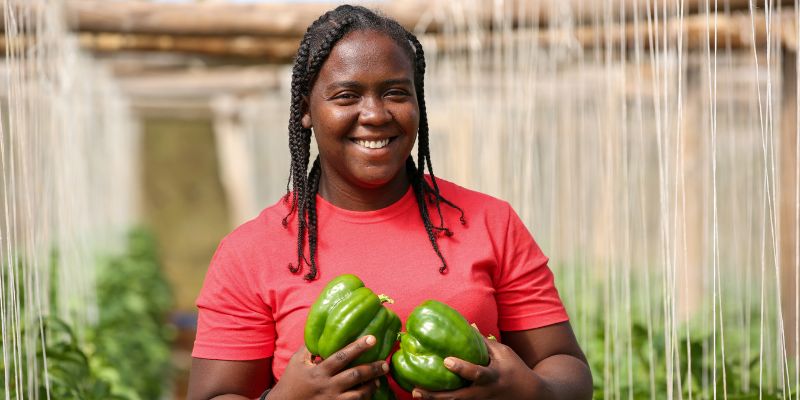
As such, the CABI Academy‘s latest course is an introduction to bioprotection products and includes practical guidance on choosing, using, and interpreting the results of bioprotection in the field. The online course is relevant to anyone interested in bioprotection but particularly benefits extension workers, agro-input dealers, and agricultural educators.
Course Structure and Content
The Introduction to Bioprotection Products course addresses the pressing need for knowledge and skills in applying bioprotection products correctly. It is a self-paced online course that spans 8-10 hours and comprizes three core sections, which delve into the following topics:
- What are bioprotection products, and how do they work?
- Using bioprotection products to monitor pest insects
- Safety information and interpreting product labels
- Access to bioprotection products
- How to transport and store bioprotection products
- Making the most of bioprotection products
- Application and interpretation of results
The importance of bioprotection products
The CABI Academy’s latest course offers a crucial opportunity for agricultural service providers to equip themselves with the knowledge and skills to support smallholder farmers using bioprotection products. By incorporating bioprotection into their practices, learners can contribute to the sustainable future of agriculture, addressing global food security challenges and protecting livelihoods.
The new course sits alongside the CABI Bioprotection Portal, a tool designed to raise awareness of bioprotection among growers and advisors. In addition, users can identify and source biocontrol and biopesticides products. The CABI Bioprotection Portal complements the bioprotection course by enabling users to put their knowledge into practice. It is available on smartphones, tablets and desktops.
So why are bioprotection products so important?
Environmentally safe
The primary advantage of biopesticides lies in their minimal impact on the environment. Unlike chemical pesticides, which can leave harmful residues in soil, water bodies, and food crops, biopesticides degrade rapidly, reducing the risk of environmental contamination. Their non-toxic nature ensures that beneficial insects, birds, and other non-target organisms remain unharmed, promoting overall biodiversity and ecosystem health.
Less hazardous to humans
Chemical pesticides have raised concerns over potential health hazards for farmers, consumers, and communities. Biopesticides, on the other hand, are generally considered safe for humans due to their natural origin and low toxicity levels. Their use contributes to a healthier farming environment and a safer food supply.
Reduced residual buildup
The accumulation of pesticide residues in crops is a pressing concern for food safety. Consumers are increasingly conscious of the chemicals present in their food, demanding produce with lower pesticide residues. Biopesticides break down more quickly, leaving little to no residues on the crops.
Managing pesticide resistance
Continuous exposure to chemical pesticides can lead to the emergence of resistant pest populations, rendering the pesticides ineffective over time. Biopesticide and biocontrol products use a variety of modes of action, reducing the chance of pest resistance. In addition, these modes of action are usually more complex than those of chemical pesticides. As a result, pests are less likely to develop resistance.
Sustainable agriculture
Biopesticides enable farmers to protect their crops while maintaining soil health, preserving beneficial insect populations, and supporting the natural balance of ecosystems. In conjunction with other sustainable practices like crop rotation and integrated pest management (IPM), biopesticide and biocontrol products contribute to long-term agricultural viability.
A more sustainable future
With more than 2,000 active learners expected to partake in the Bioprotection Course by early 2024, there is hope that these efforts will pave the way for a more resilient and sustainable agricultural landscape. All the more pertinent in the face of an ever-growing population and changing environmental conditions.
Sign up to the Introduction to Bioprotection Products online course.
This article was originally published on the PlantwisePlus Blog

Welcoming BPIA to the CABI BioProtection portal as an Associate
We are delighted to announce that the Biological Products Industry Alliance (BPIA) has joined the CABI BioProtection Portal as an Associate. This creates new opportunities for collaborations to promote bioprotection across North America. Moreover, BPIA is a non-profit organization with a mission of advancing sustainability through biological solutions. BPIA comprises over 160 companies, including biological product manufacturers, marketers, distributors, and service providers.
BPIA serves as the voice for the biological product industry, communicating with regulators, legislators, and other stakeholders. Its goal is to help biological product manufacturers make their products accessible to growers and consumers. BPIA Executive Director Keith Jones said, “BPIA is very pleased to support the CABI BioProtection Portal here in North America as another mechanism to foster the use of biological products.” We are grateful to be collaborating with such a strong voice in the industry!
A portal to support non-chemical pest management
The CABI BioProtection Portal is an online, open-access tool that provides growers and advisors with a comprehensive directory of all registered biological control products in a given country. In February 2023, the portal became live in the United States, the world’s largest market for biological pest control products. Users in the US can therefore now also benefit from this tool to quickly find bioprotection products that meet their needs. A simple search by target crop and/or pest will provide a list of all registered biological products that are suitable for use. There are also US state filters to help refine the search further.
We are optimistic that our collaboration with BPIA will increase awareness of the portal in the United States and Canada. Its existing member companies and network of growers and advisors will achieve this. Making the portal well known as an accessible, comprehensive, and up-to-date directory is essential. It should pave the way for more users to shift towards environmentally conscious products for managing their pest problems.

The CABI BioProtection Portal is thrilled to welcome KAELTIA Consulting as our newest sponsor. KAELTIA, based in the Asturias region of Spain, is a scientific regulatory affairs consultant. It guides manufacturers worldwide through the process of registering their agricultural products. With over 16 years of experience and seasoned experts integrating knowledge in chemistry, biology, (eco)toxicology, microbiology, and agroecology sciences, the Development Consortium welcomes a trusted and knowledgeable perspective to the portal. “Collaborating with regulatory experts supporting a move towards natural pest management helps drive the spirit of our mission. It provides the expertise needed to make productive change”, said Ulli Kuhlmann, CABI’s Executive Director who oversees development of the portal.
KAELTIA provides advice on eco-design and sustainable packaging of products in the Agri-Food and Chemical industry. They undertake this to achieve the European objectives of Zero Waste and Sustainable Development Strategies.
Their commitment to promoting a circular economy is something we are eager to support at the CABI BioProtection Portal. “At KAELTIA, we are committed to the environment, to the viability of our businesses, and to a safe and sustainable food system for all. This is why we have decided to join the CABI BioProtection Portal, who share and promote these same core values”. said Elisa Capellán Montoto, CEO of KAELTIA.
How the Portal is a valuable information hub on bioprotection
The CABI BioProtection Portal is an open-access, online tool aimed to help growers and advisors easily source biopesticides and biocontrol agents for pest management. Already active in 38 countries, the portal includes over 4000 bioprotection products that cover more than 940 crops and 2200 pests.
Limited awareness and access hinder the growth of natural pest solutions, despite their increasing popularity. Many countries lack an accessible, user-friendly database of registered bioprotection products. This hinders on-the-go use by growers and advisors. The portal aims to fill this gap in the market by sourcing product information directly from national authorities. It presents the information in a search engine format for users.
The portal is able to remain open-access thanks to the funding provided by our partners, sponsors, and donors. This funding enables us to keep the portal search engine up-to-date with the latest products and registration changes. It ensures the portal serves as a reliable source of information. Additionally, it helps our team publish relevant industry news stories and maintain our site’s Resources section.
Our Resources section is an information hub on bioprotection, offering introductory material and practical details for sustainably managing common pests. By providing greater accessibility to growers and advisors, we aim to accelerate awareness and uptake of bioprotection solutions. This, in turn, drives innovation within the biopesticide and biological control space. KAELTIA’s sponsorship contributes to the expansion and maintenance of the portal. It supports a central pillar of our mission: to encourage the gradual reduction in our reliance on chemical products within agriculture.
For more information about the CABI BioProtection Portal and opportunities to collaborate, visit https://bioprotectionportal.com/
May 22nd marks the International Day for Biological Diversity, which aims to raise awareness of biodiversity issues. Biodiversity is in an alarming decline and requires immediate action to protect it.
Fortunately, we can all do something to preserve biodiversity at home, starting in our gardens. Environmentally friendly practices, such as pest control using biocontrol and biopesticide products, are easy to implement and help promote biodiversity.

What is biodiversity?
Biodiversity, or biological diversity, is the variety of all living organisms, such as plants, animals, fungi, bacteria, etc. It also includes diversity within species and within ecosystems, which are defined as a community of living organisms and their physical environment.
What is the actual state of biodiversity?
Human activities can have disastrous consequences on the global diversity of our planet and have a direct negative impact on ecosystems.
Healthy ecosystems provide us with many benefits, including clean water, food and oxygen. These benefits are called “ecosystem services” and are essential for human well-being and survival.
Biodiversity is also essential to the proper functioning of ecosystems. A decrease in biodiversity means that ecosystems are more fragile and may no longer be able to provide such benefits. That is why we must preserve biodiversity at all costs.
Domestic gardens play an important role
Domestic gardens can constitute an important refuge for biodiversity and can support ecosystem services. This is especially true in urban areas where concrete surfaces are inhospitable for many organisms, and urban gardens, even smaller ones on balconies, can mimic and replace natural habitats.
Private gardens can promote biodiversity considerably by providing shelter and habitats for the local wildlife. Therefore, gardens should not be undervalued and efforts to improve their biodiversity can a make genuine impact.

Biodiversity-friendly management for domestic gardens
The role of bioprotection products
One easy way to promote biodiversity in a garden is to use environmentally friendly practices such as biocontrol and biopesticide products to control pests, diseases and weeds, instead of spraying chemical pesticides.
Chemical pesticides have well-known adverse effects on biodiversity but unfortunately, they are very common in lawn and garden products. Pesticides are harmful to both the environment and its resident, native organisms. For example, the use of pesticides is one of the drivers of the decline in pollinators, which are sensitive to even small amounts of pesticides. Pollinators are, however, essential for ecosystems’ health and are one of the most important mechanisms in promoting biodiversity.
Reducing the use of chemical pesticides is needed to support pollinators and protect biodiversity. Biocontrol and biopesticide alternatives should be favoured as they have a controlling effect on pests and diseases but are based on naturally sourced ingredients and are less harmful to the environment and to non-target organisms.
Other sustainable gardening practices
Other ways to promote biodiversity include:
- Planting companion plants: this can help with pest control by deterring pests and/or attracting predators. Example: French marigolds planted alongside tomatoes deter whiteflies
- Reducing the mowing frequency and leaving the lawn to grow: uncut flowers provide food to birds and insects
- Favouring native plants and wildflowers: they promote a larger diversity and abundance of insects than exotic plants. This, in turn, provides food for other animals (birds, amphibians, etc.).
- Using organic fertilizer and making your own compost: this preserves and promotes soil biodiversity.
- Installing an insect hotel: this provides a hidden place for insects to lay eggs, which will protect their offspring. You can either build it yourself or buy it.
- Using nets to cover crop plants instead of using pesticides can help manage some ground pests.
Promoting biodiversity in your garden
Creating a healthier environment, with little to no chemicals, alongside other sustainable practices, can boost biodiversity in domestic gardens. Gardens with more biodiversity have fewer pest problems as they provide shelter and habitats for more beneficial animals that can feed on pests. A diversity of plants and wildlife in private gardens will benefit the surrounding environment and human well-being as well.
So, start promoting biodiversity in your garden and learn more about ways to do it below:
And to find biocontrol and biopesticide products available in your country, browse the CABI BioProtection Portal.
The United Nations has set out May 21st as International Tea Day. It aims to recognize the cultural importance of tea globally and promote its sustainable production and consumption. Tea, the second most consumed beverage globally, plays a vital role in rural development, food security, and poverty reduction in developing countries.
The tea plant is native to East Asia, the Indian Subcontinent, and Southeast Asia. It was first cultivated in China as early as 5,000 years ago. Today, cultivation of tea occurs globally, in tropical and subtropical regions with the largest producers being China (2.97 million tonnes in 2020) and India (1.2 million tonnes in 2020). In celebration of this day, we will be discussing tea cultivation, common tea pests, and the bioprotection products available for managing them.

Origins of tea
For something to be considered tea, it must come from the tea plant Camellia sinensis. All types of tea commonly known today (white, yellow, green, oolong, black) are harvested from one of two major varieties of Camellia sinensis: var. sinensis and var. assamica. Every one to two weeks, workers hand-pick the bud and first two to three leaves from a given tea plant and send them for processing. It is the processing of the tea leaves, rather than the type of plant, that distinguishes different types of tea from one another. Oxidation is the process through which tea leaves are exposed to the air in order to dry and darken. Varying levels of oxidation alter the taste, color, and aroma, with black tea being the most oxidized and green tea being the least. The age of the leaf and the growing conditions affect differences in tea quality. Young, light green leaves produce the highest quality tea.
The fact that tea is harvested every few weeks throughout the year shortens the time between pesticide application and harvest compared to other crops. This makes pesticide residues of especially high concern. Tea producers in India have felt particularly high pressure to move away from pesticides as buyers last year rejected a series of tea shipments due to chemical residues being beyond acceptable limits (source). As a result, biological solutions are being ushered in.

Tea pests and bioprotection solutions
The climatic conditions required by Camellia sinensis (warm and humid) happen to be favoured by a diverse range of insects and diseases. Although caffeine, a secondary metabolite produced in C. sinensis, can deter some insects, it is not enough to keep all pests at bay. The red spider mite, Oligonychus coffeae, is among the foremost tea pests in India, and can cause up to 35-40% of crop losses. This pest punctures the leaf epidermis and sucks the cell contents, leaving the tea leaf desiccated and devoid of chlorophyll.
The CABI BioProtection Portal provides information for a variety of macrobial products that target this pest directly. These include predatory mites of the genus Amblyseius and predatory beetles from the genus Stethorus. Thrips are another notable tea pest, wreaking havoc by feeding on the underside of leaves with their piercing and sucking mouth parts. The Portal lists multiple bioprotection products for thrips on tea, including an entomopathogenic fungus from the Lecanicillium genus. It also features parasitic nematodes from the Steinernema genus. Biological products are essential for tea crops due to strict chemical residue limits imposed by countries.

The importance of distinguishing between friend and foe
Not all tea-feeding insects are foes. India produces three main types of tea: Assam, Darjeeling, and Nilgiri. Darjeeling, West Bengal, cultivates sinensis variety for black Darjeeling tea, known for its distinctive flavor and unique characteristics. The climate in this region creates four cultivation periods, known as “flushes.” The leaves harvest during each flush impart unique characteristics to the final tea product. The first two flushes produce the most flavorful and sought-after tea. The second two flushes fall into the monsoon season, which leads them to undergo rapid growth and result in a less developed flavor profile. These leaves are often used in tea blends.
In spring, tea producers harvest young, tender leaves to yield a gentle, light tea during the first flush. Tea plants experience attacks by a leafhopper and moth species before harvesting the second flush in summer. Predatory attack triggers tea plants to release protective compounds that enhance flavors especially revered by connoisseurs for the full-bodied, musky taste they confer. This is an interesting case where insect-crop interactions lead to a desirable crop characteristic. It supports the idea that insects should not be indiscriminately regarded as pests and approached with a broad-spectrum insecticide.

Tea holds diverse significance—a vital source of income, a medicinal beverage, and a daily ritual for various cultures worldwide. Next time you fill your cup, consider whether safe pest control methods were used in cultivation. Methods that protect the health of workers, consumers, and the environment, while preserving desirable tea characteristics conferred by certain ecological interactions. For more information, a good place to start is the CABI BioProtection Portal, which boasts over 4,000 bioprotection products across 39 countries and educational resources on biological pest management. Let’s better the backstory of that beverage that breathes life into us every morning!
Today marks Plant Health Day, which aims to raise awareness of how protecting plant health can help address some of the world’s biggest issues. Plant health is currently under threat, but it can be promoted and maintained with the correct knowledge and use of biocontrol and biopesticide products.

Why is plant health important?
Plants globally account for 80% of human food consumption, according to the FAO, and are the main source of nutrition for livestock. Healthy plants ensure the quality and safety of crop production, which is the basis of countless people’s livelihoods.
“Plants are the foundation for all life on Earth. Improving the health of plants is key to feeding the growing global population as well as supporting economic development around the world.” said Ulrich Kuhlmann, Executive Director, Global Operations at CABI.
Healthy plants not only produce good quality food. They are also robust when it comes to external stresses, such as environmental changes and pest attacks.
Plant health is a driver of food security and is also critical for the general health of the environment.
Plant health is under threat
Pests are one of the most serious threats to the health of plants. The FAO estimates that 40% of crops are lost yearly to pests. This poses a major risk to our food security.
Pest pressure will likely increase due to climate change. Predicted temperature increases will significantly impact the biology of pests.. For example, the life cycle of insect pests will shorten, and there will be more pest generations per crop season, which means more crop damage.
With climate change also comes extreme environmental events. Plants that are unhealthy have reduced resilience to such events, leading to greater crop losses.
Maintaining plant health is vital. It helps plants better withstand pests and environmental stresses, ensuring sustainable food production.

What can we do to protect plant health?
One of the most efficient ways to protect and maintain plant health is to use safer pest control methods.
Reliance on conventional pesticides threatens the health of plants in the long run, eventually making plants more vulnerable to pests and environmental stresses. Chemicals can greatly damage the environment, harming the natural biodiversity that surrounds and supports plant growth. Chemicals can also weaken the soils, destroying and disrupting the natural soil microbiology, which is fundamental to healthy plant growth.
Using safer alternatives such as biopesticides and biocontrol products is a good way to protect the environment and, thus, plant health. For example, some bioprotection products are specific to their target pests, others are inert or degrade naturally, making them less harmful to beneficial organisms with no lasting impact on biodiversity. This is in stark contrast to some of their more toxic chemical counterparts.
Integrated Pest Management is another safer approach that helps the crop system become more robust and healthier. This approach focuses on the use of sustainable pest management approaches such as pest prevention, biocontrol and cultural measures that do not have such adverse effects on the environment. Integrated Pest Management (IPM) permits the judicious use of low-toxicity chemical pesticides as a last resort.
Environmental health and plant health go hand in hand. Using environmentally friendly products to control pests can help maintain plant health. In return, healthier plants are more efficient at facing pest pressure and can support sustainable food production.
Browse the CABI BioProtection Portal to find bioprotection products in your country!
This article was edited from a post on the CABI blog here.

CABI’s centre in India is actively working to help cotton growers increase their yields. This involves fighting pests and diseases with safer, more environmentally friendly bioprotection products, also known as biological control (biocontrol) products and biopesticides.
India is the largest producer of cotton globally. The crop provides livelihoods to around 60 million people and there are around 5.8 million cotton farmers in the country. There are around 11.7 million hectares in India, compared to about 31.2 million hectares around the world.
However, cotton is susceptible to a wide range of potentially devastating pests and diseases such as the pink bollworm (Pectinophora gossypiella) and American bollworm (Helicoverpa armigera).
CABI’s work to promote bioprotection
Phase one of CABI’s work – carried out with the Better Cotton Initiative (BCI) – saw CABI staff train partners on the sustainable management of general pests and diseases of cotton.
The second phase of activity has started to facilitate the mass production of biocontrol agents and biopesticides. This work was achieved with the Anand Agricultural University (AAU) in Vadodara, India.
The target was to train 30 ‘master trainers’ as part of a six-day training programme to cascade knowledge to farmers.

Teaching growers to produce biocontrol agents
In the training, participants learned how to produce biocontrol agents and had practical sessions. The CABI BioProtection Portal supported them by enabling users to discover information about registered biocontrol and biopesticide products.
Some activities included master trainers showing participants host insect, Corcyra and the biocontrol agent, Trichogramma chilonis, and education on the process of producing important macrobial biocontrol agents like Chrysoperla carnea and Reduviid bug. Trainers also stated the importance of maintaining a contamination-free pure culture.
The training included a lesson on the most useful microbial biopesticides like Trichoderma and Beauveria spp. The advantage of these two biocontrol agents is that they have a considerable shelf life, allowing them to be stored on agro-dealer shelves. However, often these biocontrol agents are not available. Therefore, understanding their basic characteristics can help in the production and efficacy in the field.
These two biocontrol agents target significant pests and diseases such as bollworm, root rot, and wilt disease. Producing them could effectively manage pests and diseases in the cotton ecosystem.
Master trainers focused further on the mass production of these microbial pesticides. They covered processes such as sterilization, media preparation, inoculation, incubation, and formulation.
As part of the training, participants visited an organic cotton farm. They learned about various methods related to organic cotton farming during the visit.
Dr Malvika Chaudhary, Regional Coordinator Asia for Plantwise and Project Manager, said, “It is important to link producers at the local community level to nearby university and government science centres so that they can ensure the safe and proper use of the biocontrol agents. The master trainers also learned about quality control in biopesticides; a crucial part of biopesticide production.”
Learn more about the biocontrol and biopesticide products that exist for cotton around the world on the BioProtection Portal.

CABI launched the BioProtection Portal in Tanzania, providing growers and advisors essential information for sustainable crop pest and disease management.
The CABI BioProtection Portal is an open-access, digital tool that enables users to find registered biopesticide and biocontrol solutions. With filters for country, crop and pest, users can easily source locally available bioprotection products for their pest problems. The portal’s resources area helps growers and advisors explore the world of bioprotection with valuable information.
The CABI BioProtection Portal is the go-to resource for growers and advisors seeking bioprotection products to meet their needs. It contains a range of environmentally-friendly control options for the pests and diseases of major crops in Tanzania. This includes the fall armyworm and stalk and stem borers on maize.
The portal provides online and offline access from multiple devices, putting valuable information at the fingertips of those who need it.
Dr. Ulrich Kuhlmann discusses the launch
Dr Ulrich Kuhlmann, Executive Director, Global Operations at CABI, stated, “Globally, pests and diseases cause an estimated 40 percent crop loss.” The CABI BioProtection Portal offers a ‘one-stop shop’ for growers. It is designed for those who want to learn about and use biopesticide and biocontrol products. The CABI BioProtection Portal is a priceless resource for growers adopting a more sustainable and safer farming strategy”.
“It is increasingly clear that certain chemical pesticides in agriculture are creating serious human health and environmental concerns. Moreover, the portal will be particularly beneficial for growers looking to reduce their reliance on, or even replace, chemical pesticides. These growers will be promoting a more balanced ecosystem on their farms that will help ensure sustained productivity. In fact, these growers will also more easily meet market or export standards and satisfy consumer demands for healthier and safer food.”
How it works
The CABI BioProtection Portal is an easy-to-use tool. Users simply enter ‘Tanzania’ as their country and select their crop and/or pest in the system. The portal generates a list of bioprotection products authorized by national regulators for that specific search. The portal sources information directly from national governments’ lists of registered pesticides and from partner biocontrol manufacturers.
The CABI BioProtection Portal is available in various countries, including Australia, Bangladesh, Brazil, Canada, Chile, France, India, USA, and more.
The innovative tool has been made available by CABI in collaboration with its network of partner biocontrol manufacturers (Koppert Biological Systems, Syngenta, e-nema, Oro Agri, Idai Nature, Biobest, Applied Bio-nomics, TerraLink, Bio Insumos Nativa, Anatis Bioprotection, Crop Defenders, Andermatt Canada, Biocare and Provivi), sponsors (Nepresso, APIS, Rainforest Alliance, Mondelez International, the International Centre for Genetic Engineering and Biotechnology and Guarany) donors (the Ministry of Foreign Affairs of the Netherlands, the Swiss Agency for Development and Cooperation, African Development Bank, the UK Foreign, Commonwealth and Development Office and the European Commission’s Directorate-General for International Cooperation and Development), associates (BioProtection Global, International Organisation of Biological Control, Biological Agri Solutions of India, the International Biocontrol Manufacturers Association, the Bioagri Input Producers Association,the Pesticides Manufacturers and Formulators Association of India and the Biological Products Industry Alliance) who provide invaluable support in the form of technical inputs, strategic guidance and funding.

With climate change as a key contributor to pest and disease outbreaks, advisors and farmers seek cost-effective solutions. They aim to diagnose and treat plant health issues while reducing reliance on chemical pesticides. To support them, CABI Academy – which brings together CABI’s expertize in crop health, agricultural advisory services and digital development – is now making its crop pest diagnosis and management courses open access in 29 countries. These courses could be especially useful to users of the BioProtection Portal seeking guidance on the identification and management of their crop problems. This enables them to effectively source and apply biocontrol products.
Course students learn hands-on field skills for plant pest diagnosis, disease identification, and effective management strategies. It is based on CABI’s established methodology for diagnosis, used by thousands of Plant Doctors all over the world.
The first of the crop pest courses, the CABI Academy Crop Pest Diagnosis course has been designed to teach users to identify different insects and mites, plant-health symptoms, and nutrient deficiencies amongst other diagnosis skills. The course equips students to identify new crop threats and recognize symptoms of biotic and abiotic plant health issues.
The CABI Academy Crop Pest Diagnosis course is complemented by the CABI Academy Crop Pest Management course, which shares information on ways to manage pests and diseases in crops. It teaches how to apply integrated pest management principles (IPM) in real-world scenarios. The eight-module course covers areas such as, fungi, viruses, economic considerations, insects and mites, and chemical applications.
Using CABI Academy and CABI BioProtection Portal together
After acquiring skills from these courses, advisors and farmers utilize the CABI BioProtection Portal to search for biopesticides. These natural products help control pests and diseases in specific crops. The portal offers comprehensive information, such as safety factsheets, manufacturer details, and permissions from organizations like the Rainforest Alliance. This data pertains to bioprotection products accessible in the 29 open-access countries.
Advisors and farmers, armed with CABI Academy knowledge and BioProtection Portal information, enhance yields for personal and environmental benefits. This synergy promotes sustainable agricultural practices.
The CABI Academy and CABI BioProtection Portal are integral components of PlantwisePlus, a global program. It works towards enhancing incomes and cultivating safer, higher-quality food through sustainable crop production approaches. The program fortifies plant health systems, empowering nations to equip farmers with knowledge to reduce losses and enhance food production.
The full list of open-access countries is Afghanistan, Bangladesh, Barbados, Bolivia, Burkina Faso, Burundi, China, Costa Rica, Ethiopia, Ghana, Grenada, Iraq, Jamaica, Malawi, Mozambique, Myanmar, Nepal, Nicaragua, Pakistan, Papua New Guinea, Peru, Rwanda, South Sudan, Sri Lanka, Thailand, Trinidad & Tobago, Uganda, Vietnam and Zambia.
For more information, including creating a free CABI Academy account and access to the courses, visit https://www.cabi.org/products-and-services/academy/.

The fall armyworm (Spodoptera frugiperda) is a notorious pest. It can, and has, caused severe damage to crops across Africa. Worryingly, it is expected to further spread into Europe.
Various control options exist where the pest is present. The CABI BioProtection Portal can help you discover bioprotectants available for the fall armyworm.
However, biocontrol options for this pest are needed in Europe. Scientists in this paper titled “Potential Management Options for the Invasive Moth Spodoptera frugiperda in Europe” are calling for these options to be investigated before it establishes.
What is the fall armyworm?
The fall armyworm is a Lepidopteran pest originating from the Americas. Its larvae can feed on many crops like maize, rice and sugarcane. Maize is the preferred host of this pest.
The pest was first detected in Africa in 2016. It rapidly spread across the continent, invading almost every country. It was later found in South and Southeast Asia and, lately, Australia, where it also settled quickly.
If the fall armyworm is not managed, it will likely cause considerable damage to maize crops leading to devastating yield losses.
The predicted spread of the fall armyworm
The fall armyworm is a migratory pest and is expected to naturally spread to mainland Europe. It could also be introduced through international trade.
Climatic models predict that the fall armyworm will establish itself in the southern parts of Europe. Those include Spain, Italy, and Greece. The models also suggest that the fall armyworm could migrate seasonally to central Europe.
This could be a major threat to European agriculture if the fall armyworm is not managed in time. In the continent, maize is the second most-grown cereal. There should be a focus on finding suitable biocontrol options for many reasons.

Why biocontrol and what options could be used in Europe?
CABI scientists recently assessed the potential management options against the fall armyworm in Europe.
Cultural practices alone have been shown to be inefficient in controlling the pest. Some are also not suitable for European agriculture using machinery. Chemical pesticides should be avoided as well as they are harmful to human health and the environment. Also, the fall armyworm has already become resistant to many pesticides.
Biocontrol would be a sustainable alternative control option. But lead author Dr Dirk Babendreier urges biocontrol companies to start registering products against the fall armyworm now. They could even adopt bioprotectants that already exist.
European countries have many biocontrol agents to control lepidopteran maize pests. These products’ labels could be extended for the fall armyworm. Some bioprotectants are also registered to control the fall armyworm in other parts of the world. These products could be adapted for Europe as well.
For example, baculoviruses and Bt (Bacillus thuringiensis) bacterial pesticides are effective bioprotectants.
Registering new products and active ingredients for Europe is needed as soon as possible. It will help to mitigate the fall armyworm’s damages and avoid relying exclusively on chemical pesticides. This will reduce risks associated with chemicals and minimize potential loss of yields to farmers
But companies and farmers should act fast and prepare to prevent the pest, rather than deal with the devastating outcomes.
Go further:
- Check the guidelines developed by the International Plant Protection Convention (IPPC) to prevent and slow the spread of the fall armyworm.
- Check this FAO webpage to learn how to identify the fall armyworm.

We are excited to announce the launch of CABI BioProtection Portal new website. Improved, intuitive navigation at its core enhances user experience. The refreshed, user-friendly look makes locating information about non-chemical pest control products worldwide easier for visitors.
The portal provides users with up-to-date information on nationally registered and available biological control and biopesticide products. We have redesigned the portal making sure it provides the most user-friendly experience possible. User testing in Kenya last year enhanced the website team’s understanding of the portal’s visitors’ needs. The team updated the website’s look and feel, tailoring the user experience based on feedback.
We are particularly excited to reveal a new area of the website on the homepage dedicated to testimonials. We have included personal experiences and insights of using the portal to help visitors understand, first-hand, how this free online resource can support the move toward biological control of pests.
“The portal has all the information that I require for training farmers, which has helped me recruit more farmers into organic farming.” – Samuel Donald, Technical Assistant, Interveg Export Limited, Kenya
“The portal has given a boost to my work as I have been able to network with suppliers of the biopesticides and exchange information regularly.” – Wycliff Wachira, Agronomist, Kenton Farm Ltd, Kenya
“The portal helps us as a company provide reliable information on our evolving biologicals portfolio to support our market ambitions focused on grower needs and ensure responsible and sustainable use of our products.” – Gina M. Swart (PhD), Head of Global Product Biology Disease Control, Syngenta
Putting non-chemical pest control information in the hands of those who need it
The CABI BioProtection Portal is a ground-breaking online information resource for non-chemical pest control. Available on four continents and in local languages, its goal is to help growers and advisors identify, source, and correctly apply biological pest control products. It aims to promote awareness and uptake of more sustainable approaches to agriculture and horticulture worldwide. This innovative tool can be accessed on multiple devices, putting valuable information in the hands of those who need it.
Looking ahead, we have plans for continuous improvements to the portal.
We are currently rebuilding the product search area of the website to match the new look and feel. We hope to release it later this year. Also, we aim to develop and grow the portal, not only in terms of partners and countries covered but also user experience. We encourage you to give us feedback about the new website our feedback page and look forward to supporting you in your journey towards more sustainable agriculture.
Original article posted on Koppert.com here

Koppert has been working with CABI for a number of years. The impact of this? Knowledge about biological crop protection is starting to seep into smallholder farming communities in developing countries.
Plant doctors operate within the CABI Plantwise programme all over the world. ‘Growers come to the consultation hours of a plant doctor with a ‘sick’ maize plant on the back of their moped. The doctor makes the diagnosis, determining what is wrong with the plant and suggesting improvements for the crop. Growers trust that expert. So you can imagine how important it is that he or she explains that there are natural, biological ways to control a disease or pest. That is why it is so important to train plant doctors in this matter. Ed Moerman emphasizes, “Nature is the best ally,” reminding us of this crucial perspective. He is executive manager of the Koppert Foundation.
‘Koppert wants to encourage many more farmers to work in a cleaner way, including smallholder farmers, where there is still relatively little knowledge about integrated crop protection.’
Noticeable effect
CABI has trained plant doctors in biological control methods in recent years. This was done with a contribution from the Koppert Foundation for curriculum development. In 2018, there was a pilot in Kenya in which 51 plant doctors were trained. Ed Moerman: ‘In the past, there was a lot of confidence in chemical crop protection. You apply it and see the effect the next day. Biological crop protection doesn’t show effect overnight. Yet, evaluation of the training after about one year showed effect. Plant doctors in this region, for example, advise less often on products that are harmful to natural enemies and they increasingly point growers to natural solutions that can be bought in the local shop.’
Expand to Burundi
CABI is now scaling up the training in the newest country to join Plantwise, Burundi. Willis Ochillo, Regional Manager for Plantwise in Africa: ‘Forty-five new plant doctors have been trained in Burundi and by 2023 there will be 300. Training in integrated pest management is a part of their education. What Koppert adds to CABI’s knowledge is the focus on an integrated, sustainable way of working, which is also good for the health of the farmers themselves. Koppert also knows a lot about safe ways to apply crop protection products. Knowledge that small-scale farmers often lack and for which they do not have the right equipment.’
India: less chemistry
‘Twenty-eight plant doctors in India have undergone training.. We adapted the training to the local conditions and the knowledge of diseases and pests in India,’ says Malvika Chaudhary, Regional Coordinator for Plantwise in Asia.
Ed Moerman adds: ‘In India we have also trained private advisers in addition to the plant doctors. The Indian government is leading the way to becoming less dependent on chemicals.’
All 13,000 doctors
CABI developed the training material with financial help and knowledge from Koppert. This has recently become available via the CABI Academy and has since been requested by 20 plant doctors who haven’t had the training, but do want to apply the knowledge.
Malvika Chaudhary: ‘We are eager to give all plant doctors this training, but with more than 13,000 worldwide, that is obviously not possible in a short time.’ Also, adapting the training to each country costs time and money. ‘In addition, in a country there must also be a desire from within to change. At the very least, a government should allow new biological agents, for example,’ Ed Moerman adds. ‘In that respect, the collaboration with CABI is useful. Not only has this organisation built up a huge database of knowledge of plant diseases and pests around the world for 110 years, CABI also has connections with governments of countries where commercial parties find it difficult to gain a foothold.’
Portal
In 2021, CABI launched the CABI BioProtection Portal, offering advisors and growers an overview of all legally registered non-chemical commercial products available in their country.
‘Koppert has filled the database, but we are not the only ones. It is a complete overview of resources from all participating suppliers,’ says Ed Moerman. ‘The attention to smallholder farmers was the reason for us to market Trianum in smaller packaging in Kenya, among other places, so that our products are also within reach for smallholder farmers. Koppert Kenya has installed refrigerators in local stores to better preserve the natural products we supply. Our turnover from those small rural shops is growing. This knowledge portal is good for farmers and for us. Here merchant and pastor go hand in hand.’

We are delighted to announce that the Rainforest Alliance’s frog logo is now visible on the CABI BioProtection Portal. Users will now observe it alongside a variety of biocontrol products permitted for use under the Rainforest Alliance certification program requirements on the CABI BioProtection Portal. The Rainforest Alliance’s little green frog is a symbol of environmental, social, and economic sustainability.
The Rainforest Alliance joined the CABI BioProtection Portal in 2021 as a sponsor. Following the sponsorship, we took the opportunity to work together more closely. Due to our collaboration, users browsing the portal will now encounter the Rainforest Alliance logo displayed alongside products that certified growers authorized by the Rainforest Alliance are allowed to use.
We have benefited greatly from our relationship with the Rainforest Alliance. Together, we have been working to enhance the functionality of the portal. Recently our users have been asking, via an on-site voting form, to see which products meet specific market standards. Our work with the Rainforest Alliance showing their certification compatibility is a strong start to addressing this.
Make sure to check out the Alliance’s widely known logo now displayed on compatible products. These include various products used on coffee in Brazil and on cocoa in Ghana, plus, many more.

Look out for products on the CABI BioProtection Portal that include the frog logo, shown above, that are compatible with the Rainforest Alliance certification program
Rainforest Alliance: a globally recognized brand
Rainforest Alliance certification is one of the biggest endorsements of sustainability – a core mission of the CABI BioProtection Portal. This iconic organization works at the intersection of business, agriculture, and forests. It connects diverse allies, including farmers, forest communities, companies, and consumers. Together, we hope to start addressing some of the most pressing social and environmental challenges of today.
In working with the CABI BioProtection Portal, the Rainforest Alliance brings a globally recognized brand to this bioprotection resource. It also contributes a wealth of field knowledge about protecting and restoring nature.
The Rainforest Alliance sponsorship helps to expand the expertise of the CABI BioProtection Portal, a rapidly growing resource. María Angélica Bonilla, Senior Officer Pesticides and Alternatives at the Rainforest Alliance, said, “For the Rainforest Alliance, collaborating with CABI on this platform is an exciting opportunity for advancing the transition to a more regenerative agriculture, bringing producers closer to available biological control alternatives, as part of Integrated Pest Management (IPM) strategies, key to reducing overall pesticides use.”
Explore additional products available under the Rainforest Alliance certification program on the CABI BioProtection Portal! #FollowTheFrog
Other ways we work with Rainforest Alliance

Pest solutions and climate change are hot topics that are closely interlinked. Climate change is creating extreme weather and shifts in seasons. It’s degrading the quality of the land and soil. This can make crops weaker but make pests stronger.
Climate change speeds up the way that plant pests move around the planet. A warm environment helps them to spread further. Increased humidity allows these pests to thrive in new locations.
With a 2°C temperature increase, the number of insect pests may rise. Insects might have one to five additional life cycles per season.
The impact on agriculture
In agriculture, we are now seeing alarming types of pest hazards. Fall armyworm (Spodoptera frugiperda) infestations that spread across entire continents. Locust swarms that are the size of Luxembourg. Pests like tomato leafminer (Tuta absoluta or Phthorimaea absoluta) that can destroy up to 90% or more of tomato crops.
These increased pest hazards pose a huge threat to people working in agriculture and threaten farmer incomes and global food security.
Chemical pest solutions and climate change
To fight the pests, farmers, gardeners and growers often use synthetic pesticides. However, they are often bad for the environment and can kill beneficial insects, particularly bees. It also damages fragile ecosystems including soils and rivers. This can weaken plants’ natural resilience to climate change.
Chemical pesticides also account for around 1-4% of greenhouse gas emissions. These emissions make climate change worse. They come from the production and transportation of chemical pesticides. Both of these use fossil fuels intensively.
Furthermore, increased temperatures pose challenges to chemical products. It makes some pesticides less effective, such as Pyrethroids, which are chemicals that kill insects, including mosquitoes.
Nature-based solutions and climate smart agriculture for pest control
Many growers are now considering alternatives. These include natural pest solutions and climate smart agriculture. They want to stop plant pests as well as protect the environment. They see the benefit of choosing more eco-friendly solutions.
Two specific approaches can improve agricultural systems. The first is Nature-Based Solutions. The second is Climate Smart Agriculture.
These solutions enhance natural processes and ecosystem services. These services are the benefits to humans and wildlife provided by a healthy natural environment.
Nature-based solutions are good for agriculture and the environment. They combat the effects of climate change and involve working with nature to address challenges in society. Furthermore, they benefit human well-being and biodiversity. They protect, restore or manage natural ecosystems.
Climate smart agriculture techniques support farmers to:
- make agricultural systems more sustainable
- reduce the impacts of climate change
- reduce the emissions that cause climate change
- prevent biodiversity loss and improve soil health

Climate smart agriculture combines a range of practices and technologies. It increases agricultural productivity sustainably. Also, it enhances our ability to adapt to climate change. It also reduces or removes greenhouse gases where possible.
Biocontrol products are an important part of climate smart agriculture. As is integrated pest management (IPM). Investors and global food companies are looking to biocontrol products. They see these technologies as nature-positive solutions and an investment opportunity.

The role of biocontrol products for safer, climate-friendly farming
Nature-based pest solutions and climate-friendly farming have fewer ‘trade-offs’ compared to alternative approaches. These solutions include using biocontrol products. You can find many of these products on the CABI BioProtection Portal.
To become more resilient to the hazards of climate change, farmers can harness a number of approaches:
Biocontrol products
Biocontrol products and techniques are critical tools for climate adaptation. They avoid emissions from the production of chemical pesticides. They help to boost yields. And they maintain the natural biodiversity found on farms.
Conservation farming
Conservation farming is an important part of climate smart agriculture. It includes a number of activities:
- Protecting soil from erosion
- Preventing water pollution
- Creating and maintaining natural barriers such as foliage, rocks and trees
Integrating species
Farmers must prioritize nature in agricultural systems. In this way, they can protect the natural resources they depend on. For example, they can use natural enemies of pests. These enemies help to reduce pest populations and protect crops.
Certain species work in a system to balance each other out. Farmers can support these species interactions to adapt to climate change. This includes supporting organisms such as beneficial insects – the natural enemies of pests. This technique helps to control invasive crop pests. It helps farming systems to adapt.
See our blog on biocontrol for more information.